Alle weergawes v0.1.4077 Nov 2026Vertoning, JavaScript en JIT, Web-API’s en DOM, Media, Oortjies en koppelvlak Voer

Die weergawenotas is in Engels geskryf.

WebGL 2

WebGL 2 is here. The newest versions of the most used 3D library dropped WebGL 1, so a page built on them showed nothing at all. Floati now has the whole WebGL 2 interface with its own shading-language compiler, and it passes more of the official conformance pages than the reference browser. WebGL also reaches the screen with no copy through the processor, so a large 3D scene at retina size runs at 120 frames a second instead of 40, in less memory. Canvases are sharp on retina screens, and a heavy 3D scene shows its first frame in a third of a second instead of 23.

0 -> 344 (reference 339)WebGL 2 conformance pages passing (349)
1.26 -> 1.79Edge sharpness (reference 1.82)
40 -> 120 fps3D scene filling a retina window
Hoogtepunte5

WebGL 2

VoorNa
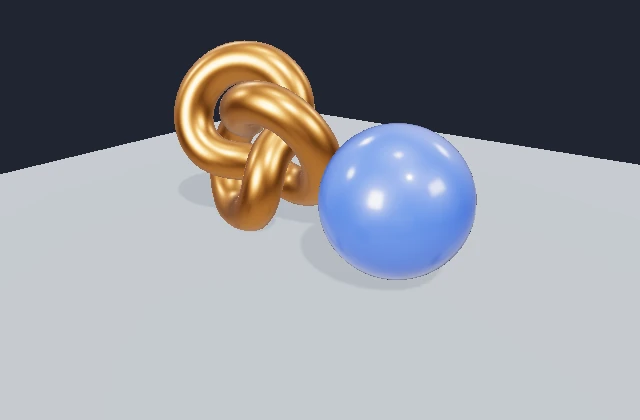
Voor: A scene from the 3D library with metal, a clearcoat, an environment map and shadows: Floati 0.1.406, Floati 0.1.407 and the reference browser.
Voor
Na: A scene from the 3D library with metal, a clearcoat, an environment map and shadows: Floati 0.1.406, Floati 0.1.407 and the reference browser.
Na · v0.1.407
Dieselfde bladsy in die verwysingsblaaier
Verwysingsblaaier

This one started with a blank page. The newest versions of the most used 3D library no longer support WebGL 1, so a 3D page built on them showed nothing at all here. We wrote WebGL 2 in six slices: the interface, a compiler for the newer shading language with real integers, textures, buffers, draw targets and transform feedback. Our software renderer stays the oracle, so every slice is checked on the GPU against it. Windows found a bug Mac hid, a 3D texture lookup that would not compile, and Mac found one of its own: its graphics driver divides integers wrongly next to some loops, so we write division out ourselves.

A scene from the 3D library with metal, a clearcoat, an environment map and shadows: Floati 0.1.406, Floati 0.1.407 and the reference browser.

WebGL 2 conformance pages passing (349)0 -> 344 (reference 339)Pixels within 16 levels of the reference99.99%

Sharp canvases on retina screens

VoorNa
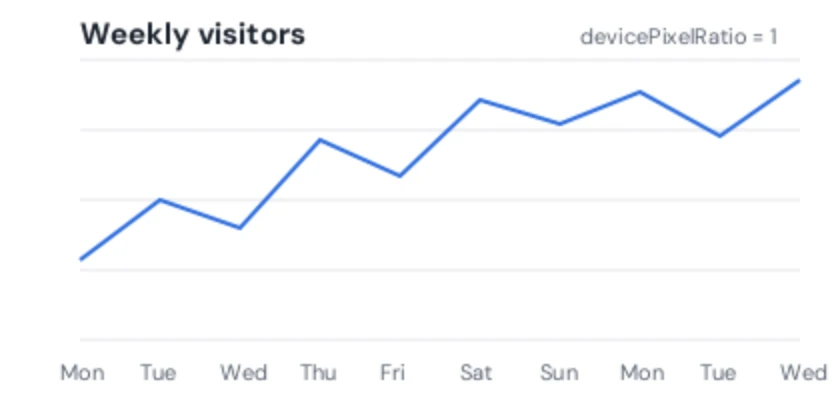
Voor: A canvas chart drawn for the screen's pixel ratio: Floati before, after, and the reference browser, on a retina screen.
Voor
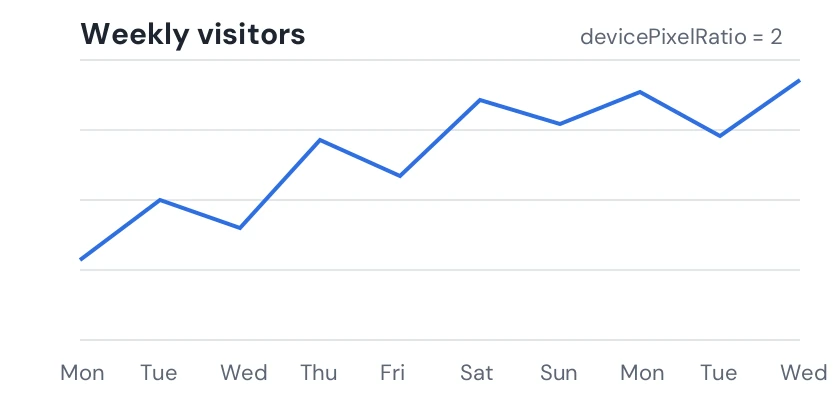
Na: A canvas chart drawn for the screen's pixel ratio: Floati before, after, and the reference browser, on a retina screen.
Na · v0.1.407
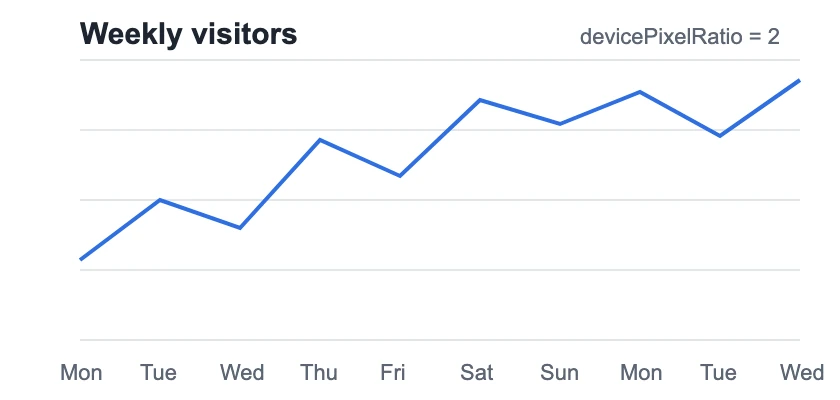
Dieselfde bladsy in die verwysingsblaaier
Verwysingsblaaier

We found this in the first minute of running a real 3D page in the app: it looked soft. The page asked for the device pixel ratio and was always told 1, so it drew at half size and the window stretched it. Every canvas and chart that scales itself for retina was blurry. Pages now see the real scale.

A canvas chart drawn for the screen's pixel ratio: Floati before, after, and the reference browser, on a retina screen.

Edge sharpness (reference 1.82)1.26 -> 1.79

WebGL straight to the screen

With the scene sharp, it was slow: every frame was read back from the GPU, flipped by the processor and sent back up as tiles. Now the page and the compositor share one buffer on the GPU, and the compositor draws the canvas and whatever covers it with the same arithmetic in the same order, so the pixels are the same bytes as before. Rotated canvases, filters and blend modes over a canvas still take the old path.

3D scene filling a retina window40 -> 120 fpsMemory706 MB -> 473 MBReference browser, same scene1,267 MB across 9 processes

A first frame in a third of a second

Comparing against the reference browser, our first frame took 23 seconds. A scene starts in software and moves to the GPU once it has drawn enough, and drawing enough was counted in vertices. A scene that builds its lighting first does little geometry and a lot of shading, so it stayed in software. Shading counts now. Fixing that showed two more: a scene that moved mid-frame could fall back to software for good, and a test page that compares two drawings could get one from each path. Both are fixed, each with a law that fails without it.

First frame of a 3D scene with lightingabout 23 s -> 325 msLowest frame rate over 69 sabout 110 fps

Found on our own page

The release check loads 14 sites, and one of them is ours. It showed an error: a script read the observer from its MutationObserver callback and found nothing, because we never passed it. Looking closer, our callbacks also ran at the wrong moment among promise jobs, and disconnecting kept records it should drop. All three are fixed.

Sites in the release check with no Floati-only errors13 -> 14 of 14

Wat verander het

36 veranderinge
  1. JavaScript en JITNew: WebGL 2. getContext('webgl2') returns a full WebGL2RenderingContext with every method and constant, vertex arrays, instancing, range draws and every buffer target. Switch: FLOATI_NO_WEBGL2.
  2. VertoningNew: shaders written in GLSL ES 3.00 compile and run: in and out, layout locations, unsigned and exact integers, non-square matrices, switch, while and do, bit operations, flat inputs, texelFetch, textureLod, textureGrad, textureOffset, textureSize and the vertex and instance ids.
  3. VertoningSpeed: shaders in the older shading language take none of the new paths and run at their old speed.
  4. JavaScript en JITNew: WebGL 2 textures: every sized format, texStorage, 3D and array textures, sampler objects, base and max level, integer and shadow samplers, and pixel buffers for upload and read.
  5. VertoningNew: depth textures and partial uploads run on the GPU, so changing part of a texture no longer sends all of it. WebGL 1 pages get the partial uploads too.
  6. VertoningNew: uniform blocks, buffer copies, getBufferSubData, sync objects and queries, including occlusion queries on the GPU.
  7. VertoningSpeed: a buffer filled again with the same size sends only the bytes that changed. 1024 draws from one uniform buffer went from 26 s and 680 MB to 4 s and 108 MB.
  8. VertoningNew: several draw targets at once, every renderbuffer format, multisampled renderbuffers, blitFramebuffer, clearBuffer, readBuffer and invalidateFramebuffer.
  9. Web-API’s en DOMSpeed: a multisampled image is resolved inside the pass that drew it, with no pass of its own, and invalidating it after a blit drops samples nobody needs: 2.9 against 4.2 ms a frame at 2048 by 2048 with four samples.
  10. VertoningNew: transform feedback, so a vertex shader can write its results back into buffers, on the GPU and in software.
  11. VertoningNew: compressed textures in the S3TC, RGTC, BPTC, ETC1, ETC2 and EAC formats, decoded by our own code. The GPU gets plain texels, so every machine draws the same pixels and offers the same formats.
  12. VertoningNew: drawingBufferStorage with sRGB and half float buffers, and per-target blending with OES_draw_buffers_indexed.
  13. MediaNew: every kind of image source reaches a texture: a playing video made by a script, an ImageBitmap, an OffscreenCanvas, an image from a blob, and an SVG image made by a script.
  14. MediaFIX: a video frame uploaded to a texture costs one copy and no allocation, the same frame twice costs nothing, and a video turns the way its file says.
  15. VertoningFIX: an ImageBitmap keeps the alpha it was asked for, and an OffscreenCanvas can be drawn into with WebGL.
  16. VertoningFIX: a texture upload is never lost when the GPU is still reading the one before it.
  17. Oortjies en koppelvlakFIX: a 3D texture lookup with an offset compiles on Windows. It failed there and worked on Mac.
  18. JavaScript en JITSafety: a WebGL draw is bounded in work and in vertices, a loop in a shader on the GPU always ends, a draw in software stops after 4 seconds, and a page cannot ask for a texture of 1 GB or more.
  19. JavaScript en JITFIX: integer division in WebGL 2 shaders is exact on Mac. The graphics driver got it wrong next to some loops, in about one program in a hundred.
  20. VertoningNew: WebGL reaches the screen with no readback. The page's drawing buffer goes straight to the compositor on the GPU, with whatever is painted over it, byte for byte the same as before. Switch: FLOATI_NO_CANVAS_LAYER.
  21. VertoningFIX: rounded corners and opacity on a WebGL canvas run on the GPU at full rate.
  22. Web-API’s en DOMFIX: opacity on an element that is only an image was ignored. A faded logo showed at full strength.
  23. Web-API’s en DOMSpeed: a WebGL canvas scrolled out of view sends no frames.
  24. VertoningFIX: pages see the real device pixel ratio. It was always 1, so every canvas and 3D scene was drawn at half size and stretched on a retina screen.
  25. Oortjies en koppelvlakFIX: a page that sizes itself while it loads sees the window's height. It saw a height three times too tall.
  26. Web-API’s en DOMFIX: a heavy 3D scene shows its first frame in a third of a second. Shader work did not count toward moving a scene to the GPU, so a scene that built its lighting first ran its first 23 seconds in software.
  27. Web-API’s en DOMFIX: a WebGL scene that moves to the GPU in the middle of a frame stays there. A clear on a target holding depth from software sent it back to software for good, at 0.2 frames a second.
  28. Web-API’s en DOMFIX: a page that reads its own pixels is moved to the GPU only between frames, so a test that compares two drawings sees one path.
  29. JavaScript en JITFIX: MutationObserver callbacks get their observer as the second argument, run in order among promise jobs, and lose nothing on disconnect. Our own browser page showed an error because of it.
  30. JavaScript en JITSpeed: a loop with a return or break moves into compiled code and stays there. A first call over four million elements went from 379 ms to 3 ms.
  31. VertoningFIX: modules with long import lists load. A library that imported more than about 30 names at once never started.
  32. JavaScript en JITFIX: fn.apply with a typed array or an array-like passes its elements, a typed array made from another converts each element, and canvas width="64px" on WebGL means 64.
  33. VertoningFIX: a backslash before a new line in a template literal is removed, and \0 is a NUL character.
  34. VertoningSpeed: the storage button keeps one database connection instead of opening the encrypted file on every refresh, which took 3.6% of a core.
  35. Oortjies en koppelvlakFIX: the dead Never suspend items are gone from the tab menu, and the tab's hover card reads Pages and engine.
  36. VertoningTesting: new laws cover WebGL 2, the canvas layer and observers. The canvas layer laws were checked by changing the code one edit at a time: 21 of 23 edits were caught, and the 2 left change nothing.

Alles sedert v0.1.407 op een plek

Weergawes

v0.1.0 - 0.1.9 · 10 Jul 2026418v0.1.427 · 25 Nov 2026

November2026 · 13 weergawes

Oktober2026 · 32 weergawes

38530 OktAhead of the reference runtime on 7 of 8 workloadsv0.1.385 · Geheue en lees32 38429 OktSafety review, a rare crash fixed, functions compiled soonerv0.1.384 · Geheue en lees46 38327 OktJavaScript ahead of the reference runtime on six of eight speed testsv0.1.383 · JavaScript en JIT36 38225 OktClosed tabs give their memory back, and XML pages read as XMLv0.1.382 · Geheue en lees12 38125 OktLighter script code, and calls between scripts that run as ordinary callsv0.1.381 · Geheue en lees15 38025 OktScrolling boxes scroll, pages look right, and scripts from other sites need permissionv0.1.380 · Vertoning16 37924 OktPages laid out the way their authors wrote them, and less memory againv0.1.379 · Vertoning22 37823 OktOther sites' data stays private, and less memory againv0.1.378 · Geheue en lees 37723 OktAbout half the memory of the reference browser on everyday sitesv0.1.377 · Geheue en lees15 37622 OktA minimized window stops piling up graphics memoryv0.1.376 · Geheue en lees 37522 OktClosed pages let go, sites stay apart, and fonts stop costing memoryv0.1.375 · Geheue en lees9 37421 OktA floating video you can move, that opens without a black flashv0.1.374 · Oortjies en koppelvlak 37321 OktEvery page on our own engine, two pages side by side, videos that keep playing, and your own clockv0.1.373 · Oortjies en koppelvlak17 37021 OktOpen your files, share to your phone, have pages read aloud, install sites as apps, play with a controller, and accented text drawn rightv0.1.370 · Privaatheid en Shields · probeer dit11 36920 OktPasskeys with Touch ID and Windows Hello, sites that work offline, notifications you allow, and devices asked for first, all kept on your devicev0.1.369 · Privaatheid en Shields · probeer dit9 36519 OktThe code-size budget fits your processor, and code that has gone cold makes room for code that is hot nowv0.1.365 · JavaScript en JIT · probeer dit 36419 OktCompiled code that fits the processor's caches: big pages up to 1.8 times faster, and fast compiled code on Windows and Intel machinesv0.1.364 · JavaScript en JIT · probeer dit 36319 OktThermal runs on one code generator, building strings is up to 8 times faster, and two slow paths that grew with the square of their input are linearv0.1.363 · JavaScript en JIT · probeer dit12 35816 OktThermal, Floati's own optimizing compiler, is on: hot loops keep their numbers and strings in registersv0.1.358 · JavaScript en JIT · probeer dit 35715 OktLoops that test a number run as machine code, more of your functions compile, and reading page nodes is three times fasterv0.1.357 · JavaScript en JIT · probeer dit14 35614 OktRecursion makes a fraction of the calls, loops keep objects in registers, and element writes stop searchingv0.1.356 · JavaScript en JIT · probeer dit 35514 OktA hot loop changes compiler without stopping, property writes skip the detour, and pure recursion remembers its answersv0.1.355 · JavaScript en JIT · probeer dit 35413 OktFloati compiles JavaScript with its own compiler, Updraft: about a hundred times faster to compile, and compiled code no longer piles upv0.1.354 · JavaScript en JIT · probeer dit 35211 OktCode that loads on demand starts at once, images decode beside their downloads, writes run compiledv0.1.352 · Vertoning · probeer dit10 35010 OktHelpers that compile, strings that stay small, and events that fire fastv0.1.350 · JavaScript en JIT · probeer dit14 3436 OktSign-ins that stay signed in, a real IndexedDB, and a storage button that shows what sites keepv0.1.343 · Privaatheid en Shields · probeer dit25 3385 OktPages load faster, render truer and gain a dozen modern web features, each one checked against the reference browserv0.1.338 · Web-API’s en DOM · probeer dit19 3352 OktA developer-docs site works like the reference browser, and every frame gets its own built-insv0.1.335 · Vertoning12 3342 OktIframes that cost what a paragraph costs, live selections, and rounder cornersv0.1.334 · Vertoning10 3331 OktFewer script errors on real sites, and finished pages give all their memory backv0.1.333 · JavaScript en JIT10 3311 OktA crash on busy news sites fixed, and pages lighter on the processorv0.1.331 · Vertoning 3301 OktJavaScript scores 100, and big pages stop stuttering when they clean upv0.1.330 · JavaScript en JIT11

September2026 · 29 weergawes

32930 SeptThe JavaScript engine proves what it can skipv0.1.329 · JavaScript en JIT9 32830 SeptJavaScript runs at the reference browser's speed on 41 of our 42 measured workloadsv0.1.328 · JavaScript en JIT 32528 SeptDeep recursion runs like it does in the reference browserv0.1.325 · JavaScript en JIT 32327 SeptJavaScript measured at 94, JSON three times faster, and a round of fixes found against the reference browserv0.1.323 · JavaScript en JIT11 32227 SeptClosed pages give their memory back whole, and JavaScript measured at 87v0.1.322 · JavaScript en JIT11 32127 SeptHalf the memory, and JavaScript measured at 80v0.1.321 · JavaScript en JIT14 32026 SeptPages no longer freeze while a script waits on the networkv0.1.320 · JavaScript en JIT 31926 SeptA PDF viewer that does what Acrobat Pro charges forv0.1.319 · Oortjies en koppelvlak16 31025 SeptPages stay alive, repaints never block your scroll, and type matches the reference browser'sv0.1.310 · Vertoning10 30924 SeptPages arrive like they do in the reference browser, in a fraction of the memoryv0.1.309 · Netwerk13 30824 SeptPages drawn by your graphics card, and scrolling that never waitsv0.1.308 · Vertoning 30122 SeptSites can no longer follow you between other sites, and the next page starts soonerv0.1.301 · Privaatheid en Shields 30019 SeptReads the newest web compression, reuses secure connections, and remembers where sites livev0.1.300 · Geheue en lees 29717 SeptSetting up and filling arrays of numbers is now several times faster, and faster than the reference browserv0.1.297 · JavaScript en JIT 29116 SeptA private wayback machine for pages you seal, cited answers that open where you read them, and a privacy report that is ready the instant a page loadsv0.1.291 · Geheue en lees 29015 SeptFloati spots trackers no list has caught, answers your questions from your own reading, and gets even closer to the pixelv0.1.290 · Privaatheid en Shields 28815 SeptThe pages where you type a password stay out of your memory, and text renders truer to the pagev0.1.288 · Geheue en lees 28311 SeptMessages between windows now prove who sent themv0.1.283 · Vertoning 28111 SeptSee a site's own rules protect you, and what it was never toldv0.1.281 · Vertoning 27410 SeptFingerprint Shield: see and prove what a page tried to learn about youv0.1.274 · Geheue en lees 2468 SeptMemory: your browser remembers what you read, and can prove itv0.1.246 · Geheue en lees 2346 SeptWebAssembly SIMD lands, completing the WebAssembly platformv0.1.234 · Vertoning 2335 SeptReal WebAssembly apps that share memory with the page now workv0.1.233 · Geheue en lees 2173 SeptYour passwords, the Floati wayv0.1.217 · Oortjies en koppelvlak 2112 SeptA correctness fix for today's list-speed improvementv0.1.211 · JavaScript en JIT 2102 SeptThe most common way people work with lists of data now runs at full speedv0.1.210 · JavaScript en JIT 2092 SeptBig objects are instant now, instead of getting slower the more you addv0.1.209 · Geheue en lees 2082 SeptFloati's own engine got dramatically faster at the code real pages run every framev0.1.208 · JavaScript en JIT 2061 SeptExplain this page: the browser now understands what a site does, and can prove itv0.1.206 · Privaatheid en Shields

Augustus2026 · 19 weergawes

20328 AugPages you open with the Floati engine now render on your graphics cardv0.1.203 · Vertoning 19421 AugFaster on pages that change as you use them - plus a tab-hover fixv0.1.194 · Oortjies en koppelvlak 19321 AugSelect text, find on the page, and zoom - plus faster renderingv0.1.193 · Oortjies en koppelvlak 18619 AugEngine tabs remember where you werev0.1.186 · Oortjies en koppelvlak 14814 AugWebAssembly numbers stay exact: 64-bit integers cross as BigIntv0.1.148 · JavaScript en JIT 14714 AugWebAssembly interop rounds out: imported globals and memoryv0.1.147 · Geheue en lees 13914 AugWebGL can texture from an image or a canvasv0.1.139 · Vertoning 13414 AugWebAssembly now runs real compiled modules, not just toy onesv0.1.134 · Geheue en lees 13313 AugThe engine now runs WebAssemblyv0.1.133 · Geheue en lees 12813 AugHSTS: sites that demand https are never reached over plaintext, not even oncev0.1.128 · Netwerk 1097 AugWeb Audio convolution reverb + stereo sample playbackv0.1.109 · Media 785 AugAsk knows when to stop, and forms can edit their fieldsv0.1.78 · Web-API’s en DOM 775 AugAsk joins the dots across sentencesv0.1.77 · JavaScript en JIT 745 AugBracket property access gets fast, and Ask follows your timelinev0.1.74 · Vertoning 735 AugBuilding a list gets fast, and Ask hears whole phrasesv0.1.73 · JavaScript en JIT 725 AugMethod calls get up to speed, and Ask spreads its sourcesv0.1.72 · Geheue en lees 715 AugRecursion gets its speed back, and Ask reads the roomv0.1.71 · JavaScript en JIT 704 AugOne press, and you are on the new versionv0.1.70 · Oortjies en koppelvlak 661 AugThe worst score on the board turned out to be a cookie bannerv0.1.66 · Vertoning9

Julie2026 · 11 weergawes