Alle Versionen v0.1.4045 Nov 2026Darstellung, JavaScript und JIT, Web-APIs und DOM, Gedächtnis und Lesen, Tabs und Oberfläche Feed

Die Versionshinweise sind auf Englisch geschrieben.

WebGL pages finally move

WebGL pages finally move. An animated WebGL canvas stood still on screen until now, because the page was never told it had new pixels. That is fixed, WebGL runs on the real GPU by default with edges as smooth as the reference, and animation follows your display instead of stopping near 30 frames a second, so a test page reaches 120 on a 120 Hz screen. Big images and canvases cost far less on every site, and scripts a page writes while loading now run in order, which brought three public WebGL samples to life. A wrong-bytes bug in web encryption is fixed too. The GPU row moves 75 to 77.

99.83%, 100% and 100% on three scenesFrozen frame, pixels within 16 levels of the reference
1.44 -> 0.50 levels of 255Frozen frame, mean difference from the reference
Highlights2

WebGL pages finally move

VorherNachher
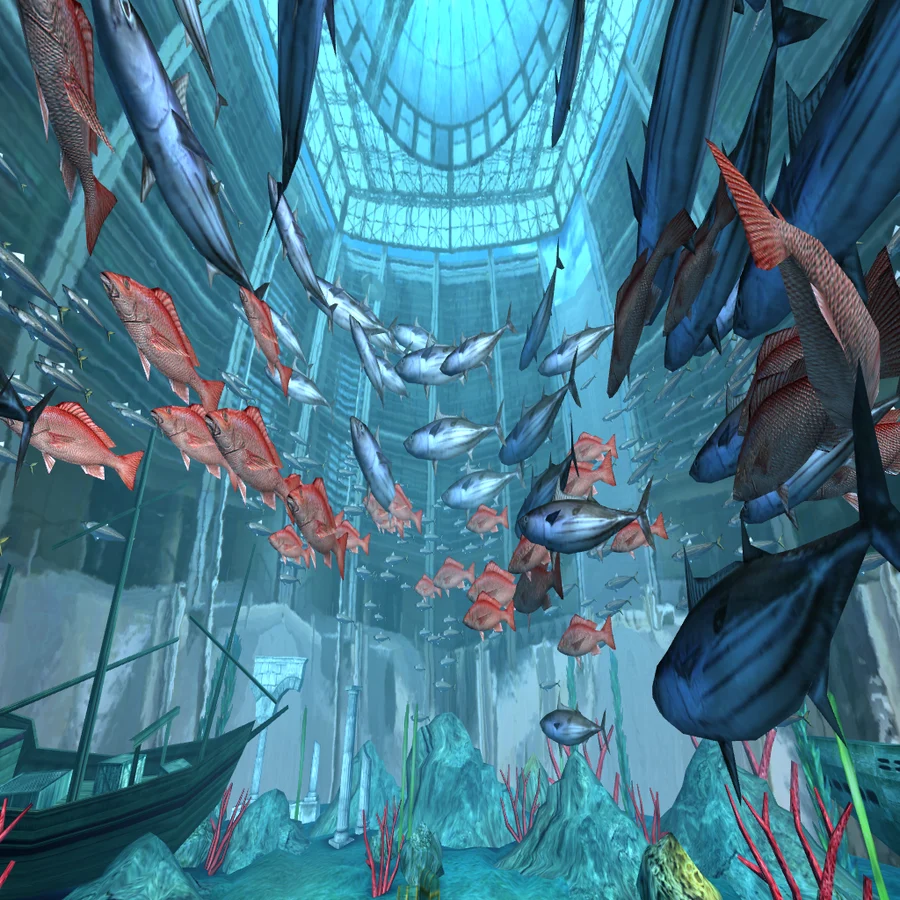
Vorher: A real WebGL scene: Floati without these fixes, with them, and the reference browser, on one frozen frame.
Vorher
Nachher: A real WebGL scene: Floati without these fixes, with them, and the reference browser, on one frozen frame.
Nachher · v0.1.404
Dieselbe Seite im Referenzbrowser
Referenzbrowser

An animated WebGL page ran, drew every frame, and showed you none of them. Nothing told the engine there were new pixels, so what you saw was a blank canvas or the first frame. Worse, the libraries many of these pages write in with document.write ran too late, so some never started at all. Both are fixed, WebGL now moves to the real GPU once a context gets busy, and each device works on its own thread so the page's script is not waiting on it.

A real WebGL scene: Floati without these fixes, with them, and the reference browser, on one frozen frame.

Frozen frame, pixels within 16 levels of the reference99.83%, 100% and 100% on three scenesThree real scenes, frames per second on a 120 Hz displaystood still -> 60, 67 and 98Memory on those scenes, against the reference900, 624, 564 MB against 1,398, 1,463, 1,571 MB

Edges as smooth as the reference

VorherNachher
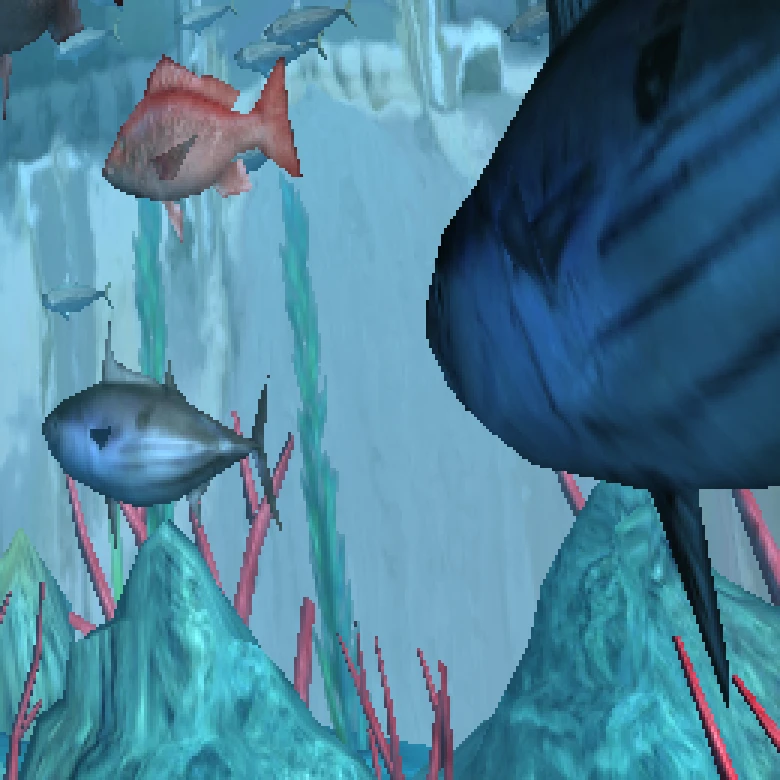
Vorher: One small part of a frozen frame, enlarged: one sample, four samples, and the reference browser.
Vorher
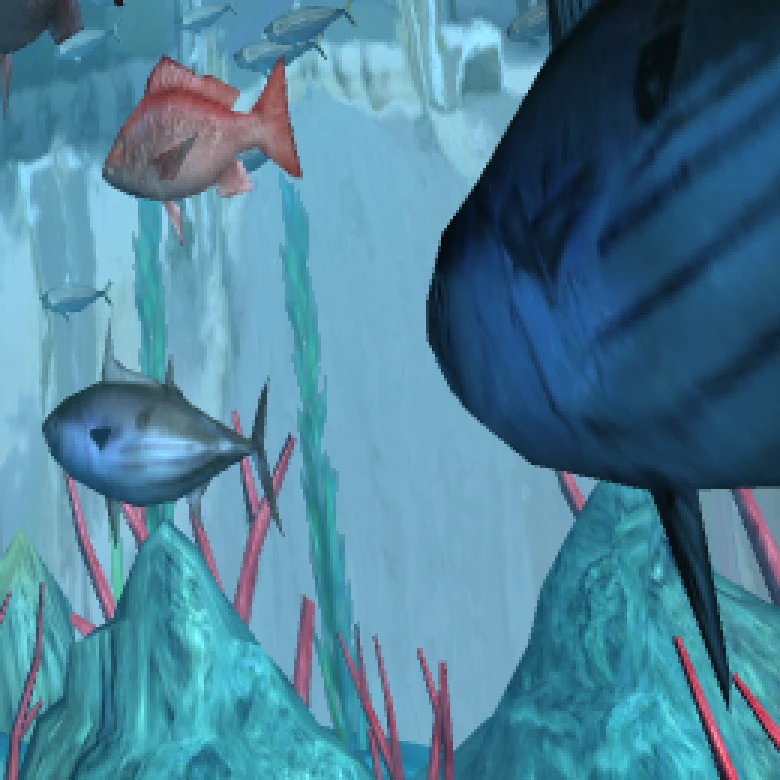
Nachher: One small part of a frozen frame, enlarged: one sample, four samples, and the reference browser.
Nachher · v0.1.404
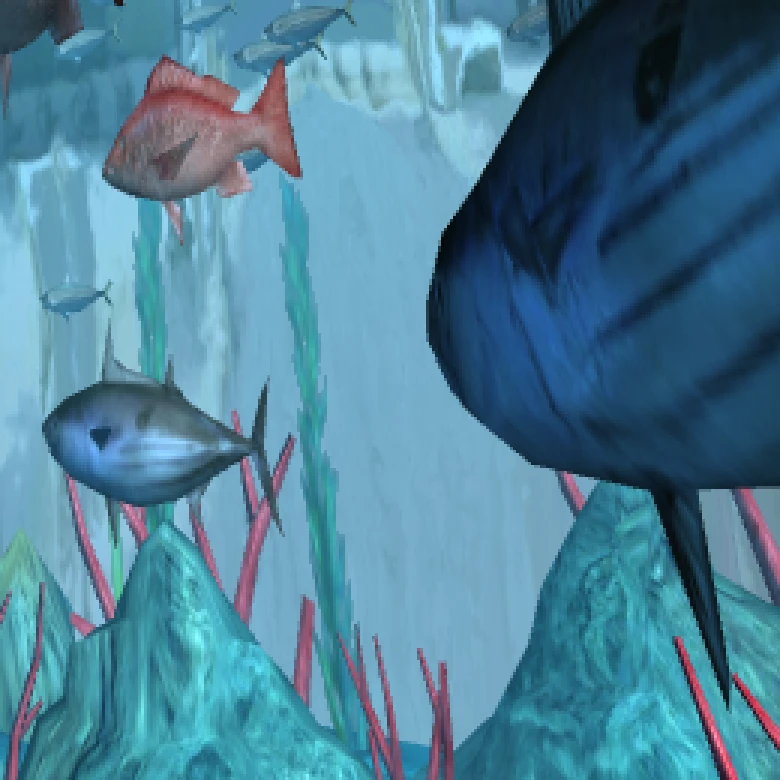
Dieselbe Seite im Referenzbrowser
Referenzbrowser

We almost shipped this with stair-stepped edges. The conformance suite passed and the pages looked fine at a glance, so we built a harder test: freeze the clock and the random numbers in both browsers, draw the same frame, and compare the raw bytes. That showed it at once. A page's antialias setting was being forced off, because the software renderer cannot do it, and that switched off the GPU's four samples too. It costs real speed, and we measured it, but quality comes first and every scene still holds 60 frames a second or better.

One small part of a frozen frame, enlarged: one sample, four samples, and the reference browser.

Frozen frame, mean difference from the reference1.44 -> 0.50 levels of 255Worst single pixel173 -> 79

Was sich geändert hat

25 Änderungen
  1. Web-APIs und DOMFIX: WebGL edges are antialiased. The context asked for it and the GPU was ready, but the setting was forced off because the software renderer cannot do it, so every edge on a real page was stair-stepped. On a frozen frame of a real scene, pixels within 16 levels of the reference went from 97.63% to 99.83%. Past 16 million pixels a canvas draws one sample, because a page picks that size and samples multiply it.
  2. Web-APIs und DOMFIX: an animated WebGL canvas stood still on screen. The page ran and drew, but nothing told the engine there were new pixels, so the first frames stayed up. A draw now reaches the paint.
  3. Web-APIs und DOMFIX: encryption and hashing read the wrong bytes. crypto.subtle digest and encrypt, and an AES IV, read the whole buffer behind a subarray or DataView instead of the part it covers, so they gave wrong results with no error. WebGL and WebGPU buffer uploads had the same fault. Every API now reads what a view covers.
  4. JavaScript und JITFIX: a page animating with requestAnimationFrame stopped near 30 frames a second, because the engine's loop allowed no more turns than that. A page on screen that asks for a frame now runs at the display's rate, and hidden tabs stay throttled.
  5. Web-APIs und DOMFIX: requestAnimationFrame's timestamp was a counter that added 16 per request, not time. It is real time now, on a grid of the display's frames, and every callback in a frame sees the same value.
  6. Tabs und OberflächeSpeed: animation follows the display's real refresh rate, read from macOS or Windows, instead of a fixed 60.
  7. Web-APIs und DOMSpeed: a big image cost a full read of every byte, for every tile row, on every frame. An image is now read once per allocation, and a fresh canvas frame gets an id without being read. On an 800 by 600 WebGL page this took a core from 73% to 41%, and it helps any page with large images or canvases.
  8. DarstellungWebGL: runs on the real GPU by default once a context is busy, with the software renderer as the path for anything small. A script that draws a little and reads it back still never reaches the GPU, so it gets the same bytes on every machine.
  9. Web-APIs und DOMWebGL: a busy context that is too slow in software to finish three frames now moves on the amount it has drawn, counted in vertices so it is the same on every machine, and only at a clear, so nothing it needs is left behind.
  10. Gedächtnis und LesenWebGL: each GPU device works on its own thread, so validation, encoding and submitting leave the script thread. WebGPU gets this too. The queue is bounded, so a page that outruns the GPU waits rather than filling memory.
  11. JavaScript und JITWebGL: a repeated mesh costs one list and one upload per submit, uniforms stay in place during a draw, and GL calls skip the walk up the prototype chain.
  12. DarstellungFIX: scripts a page writes with document.write ran after the page's other scripts, so a library loaded that way was missing when the next script needed it. They now run in order, before the next script.
  13. DarstellungFIX: insertAdjacentHTML ran the scripts it inserted. The standard says they stay inert.
  14. Web-APIs und DOMFIX: preserveDrawingBuffer was accepted and ignored. Without it a presented buffer now starts over, as the standard says, and the screen keeps the frame.
  15. DarstellungFIX: a new depth renderbuffer on the GPU started at 0 instead of 1, so nothing passed the depth test. New storage now counts as a new image.
  16. Gedächtnis und LesenFIX: deleted WebGL objects kept their GPU memory until the context closed. They now leave within 16 presented frames.
  17. DarstellungFIX: releasing a GPU resource while a pass still used it broke the pass. Releases now wait for the submit.
  18. DarstellungFIX: a shader may reuse a built-in function's name, such as a function called abs with no arguments. Only a built-in's exact signature is refused.
  19. DarstellungFIX: instanced drawing needs one attribute with a divisor of zero, and draws nothing out of bounds when it draws nothing. Both now follow the rules.
  20. DarstellungFIX: isVertexArrayOES with another context's object answers false with no error.
  21. DarstellungFIX: getAttribLocation and getUniformLocation on an unlinked program give INVALID_OPERATION, whatever the name.
  22. DarstellungWebGL: shaders translate to the GPU from the code the software renderer runs, so both agree on what a shader means. Points draw as GPU quads, viewports may pass the target, and a resized canvas is not read back.
  23. JavaScript und JITFIX: WebGL conformance. Cube sub images need no square check, copies past the framebuffer edge keep what they can, stencil rules compare only the bits a stencil buffer has, long names are refused, and a deleted image lives while a framebuffer or vertex array holds it.
  24. DarstellungTesting: a new tool freezes the clock and random numbers of a real WebGL page and compares raw pixels with the reference. That is what found the edges.
  25. DarstellungTesting: new laws cover a draw reaching the paint, a presented buffer starting over, deleted objects leaving the GPU, views reading their own bytes, written scripts running in order, and an image's id dying with it.

Alles seit v0.1.404 an einem Ort

Versionen

v0.1.0 - 0.1.9 · 10 Jul 2026418v0.1.427 · 25 Nov 2026

November2026 · 19 Versionen

4088 Nov3D at 120 frames a secondv0.1.408 · Darstellung23 4077 NovWebGL 2v0.1.407 · Darstellung36 4066 NovA stuck tab stops at oncev0.1.406 · Darstellung16 4055 NovSmall WebGL drawings get smooth edgesv0.1.405 · Darstellung 4045 NovWebGL pages finally movev0.1.404 · Darstellung25 4035 NovWebGPU is herev0.1.403 · Darstellung35 4004 NovSmooth turns, the same bytes on every chip, and fields that keep their textv0.1.400 · Darstellung15 3994 NovAnimations on the GPU compositor, and text that stays in its boxv0.1.399 · Darstellung22 3984 NovGradient patterns that tile, animations that keep up, and a much faster canvasv0.1.398 · Darstellung14 3973 NovTransitions that ease, and a GPU that draws 94% of real pages itselfv0.1.397 · Darstellung 3963 NovAnimations on the GPU compositor, and spinners that spin as arcsv0.1.396 · Darstellung 3953 NovCarousels that fade, badges that stay put, and floats that stay insidev0.1.395 · Darstellung12 3943 NovBackground images over their colour, interlaced pictures, and borders in every colourv0.1.394 · Darstellung 3932 NovStyle sheets in page order, and symbols that fall back like macOSv0.1.393 · Darstellung 3922 NovIcon fonts loaded by script, and colour emoji on Windowsv0.1.392 · Tabs und Oberfläche 3911 NovEmoji in colour, sized as in the reference browserv0.1.391 · JavaScript und JIT 3901 NovA classified ads site's front page: blank before, whole nowv0.1.390 · JavaScript und JIT12 3891 NovA computer maker's home page: navigation labels back, buttons apartv0.1.389 · Darstellung 3881 NovA space agency's home page, a news section and a language site's header now match the referencev0.1.388 · Darstellung18

Oktober2026 · 40 Versionen

38731 OktNews pages line up: a news site from 19.9% to 10.9% differentv0.1.387 · Darstellung 38631 OktReal sites render closer to the reference browserv0.1.386 · Darstellung14 38327 OktJavaScript ahead of the reference runtime on six of eight speed testsv0.1.383 · JavaScript und JIT36 38025 OktScrolling boxes scroll, pages look right, and scripts from other sites need permissionv0.1.380 · Darstellung16 37924 OktPages laid out the way their authors wrote them, and less memory againv0.1.379 · Darstellung22 37823 OktOther sites' data stays private, and less memory againv0.1.378 · Gedächtnis und Lesen 37723 OktAbout half the memory of the reference browser on everyday sitesv0.1.377 · Gedächtnis und Lesen15 37622 OktA minimized window stops piling up graphics memoryv0.1.376 · Gedächtnis und Lesen 37522 OktClosed pages let go, sites stay apart, and fonts stop costing memoryv0.1.375 · Gedächtnis und Lesen9 37421 OktA floating video you can move, that opens without a black flashv0.1.374 · Tabs und Oberfläche 37321 OktEvery page on our own engine, two pages side by side, videos that keep playing, and your own clockv0.1.373 · Tabs und Oberfläche17 37221 OktYour data stays put, your choices stick, and dictation that really listensv0.1.372 · Darstellung 37121 OktDrop files onto pages, dictate without your voice leaving the Mac, and controllers that rumblev0.1.371 · Web-APIs und DOM · testen 37021 OktOpen your files, share to your phone, have pages read aloud, install sites as apps, play with a controller, and accented text drawn rightv0.1.370 · Datenschutz und Shields · testen11 36920 OktPasskeys with Touch ID and Windows Hello, sites that work offline, notifications you allow, and devices asked for first, all kept on your devicev0.1.369 · Datenschutz und Shields · testen9 36820 OktA site's own security rules are kept the whole time the page runs, Trusted Types, a map of every unsafe write in DevTools, and animations from scriptv0.1.368 · Datenschutz und Shields · testen 36720 OktEvents, form controls, performance timing, URL patterns, live streams and the newest JavaScript: the Web APIs score rises from 59 to 62v0.1.367 · Web-APIs und DOM · testen10 36619 OktEvents, custom form controls, fonts and navigation work the way the web standards say: the Web APIs score rises from 53 to 59v0.1.366 · Web-APIs und DOM · testen9 36519 OktThe code-size budget fits your processor, and code that has gone cold makes room for code that is hot nowv0.1.365 · JavaScript und JIT · testen 36419 OktCompiled code that fits the processor's caches: big pages up to 1.8 times faster, and fast compiled code on Windows and Intel machinesv0.1.364 · JavaScript und JIT · testen 36319 OktThermal runs on one code generator, building strings is up to 8 times faster, and two slow paths that grew with the square of their input are linearv0.1.363 · JavaScript und JIT · testen12 36219 OktA page scheduler that stalled now runs, try / finally and spreads compile, and deleting thousands of properties is 180 times fasterv0.1.362 · Darstellung · testen 36118 OktThermal runs on Windows and Intel machines, a register fix for compiled code on Windows, try / catch compiles, and reading a growing string is 200 times fasterv0.1.361 · JavaScript und JIT · testen 36018 OktEvery byte of machine code is Floati's own, a news site that showed blank renders, Gust's code is half the size, and closures and ?? compilev0.1.360 · JavaScript und JIT · testen9 35916 OktThermal reads object members and folds Math, string building compiles, and methods, Array subclasses and globals behave as the standard saysv0.1.359 · JavaScript und JIT · testen 35816 OktThermal, Floati's own optimizing compiler, is on: hot loops keep their numbers and strings in registersv0.1.358 · JavaScript und JIT · testen 35715 OktLoops that test a number run as machine code, more of your functions compile, and reading page nodes is three times fasterv0.1.357 · JavaScript und JIT · testen14 35614 OktRecursion makes a fraction of the calls, loops keep objects in registers, and element writes stop searchingv0.1.356 · JavaScript und JIT · testen 35514 OktA hot loop changes compiler without stopping, property writes skip the detour, and pure recursion remembers its answersv0.1.355 · JavaScript und JIT · testen 34910 OktScripts that grow in step with their work, layouts laid out once, and colours mixed like the referencev0.1.349 · Darstellung · testen13 3489 OktScripts that only compile when it pays, cards that line up, and bold that stays boldv0.1.348 · Darstellung · testen14 3478 OktCards inside links, small print at its real size, and errors you can followv0.1.347 · Darstellung · testen17 3467 OktA real performance timeline, site icons from the engine with a lookalike check, and forms that lay out rightv0.1.346 · Darstellung · testen14 3457 OktReal WebGL, a real 2D canvas, and canvas text that matches the reference browserv0.1.345 · Darstellung · testen10 3446 OktRetina text that keeps its spacing, embeds at their real size, and an address bar that keeps upv0.1.344 · Darstellung 3436 OktSign-ins that stay signed in, a real IndexedDB, and a storage button that shows what sites keepv0.1.343 · Datenschutz und Shields · testen25 3425 OktTheme switchers, chart labels sized by CSS, and SVG text you can measurev0.1.342 · Web-APIs und DOM · testen 3415 OktCanvas text measured and drawn like the reference browser, and SVG shapes you can measurev0.1.341 · Darstellung · testen 3405 OktScripts can read and change SVG the way they do in the reference browser, and a hidden hang is gonev0.1.340 · Darstellung · testen10 3385 OktPages load faster, render truer and gain a dozen modern web features, each one checked against the reference browserv0.1.338 · Web-APIs und DOM · testen19