Las notas de versión están escritas en inglés.
Pages load faster, render truer and gain a dozen modern web features, each one checked against the reference browser
This is the biggest engine release so far. A CSS framework's docs load in 2 seconds instead of 30, a developer-docs site runs its scripts three times faster, a code-hosting site parses half as much code per visit and a news site no longer gets stuck waiting on a request that never ends. Japanese and Chinese sites that use older text encodings now show real text instead of garbled symbols, every one of the 148 named CSS colours paints (a third of them were missing), and text inside embedded frames uses the same fonts as the page. Underneath, web components get a real shadow DOM, stylesheets you can build in code, safe HTML insertion with the new Sanitizer, and typed CSS values. Each new feature is compared with the reference browser answer by answer, and the safety-critical ones are also proven by laws that run thousands of generated cases on every build.
Every CSS colour name paints
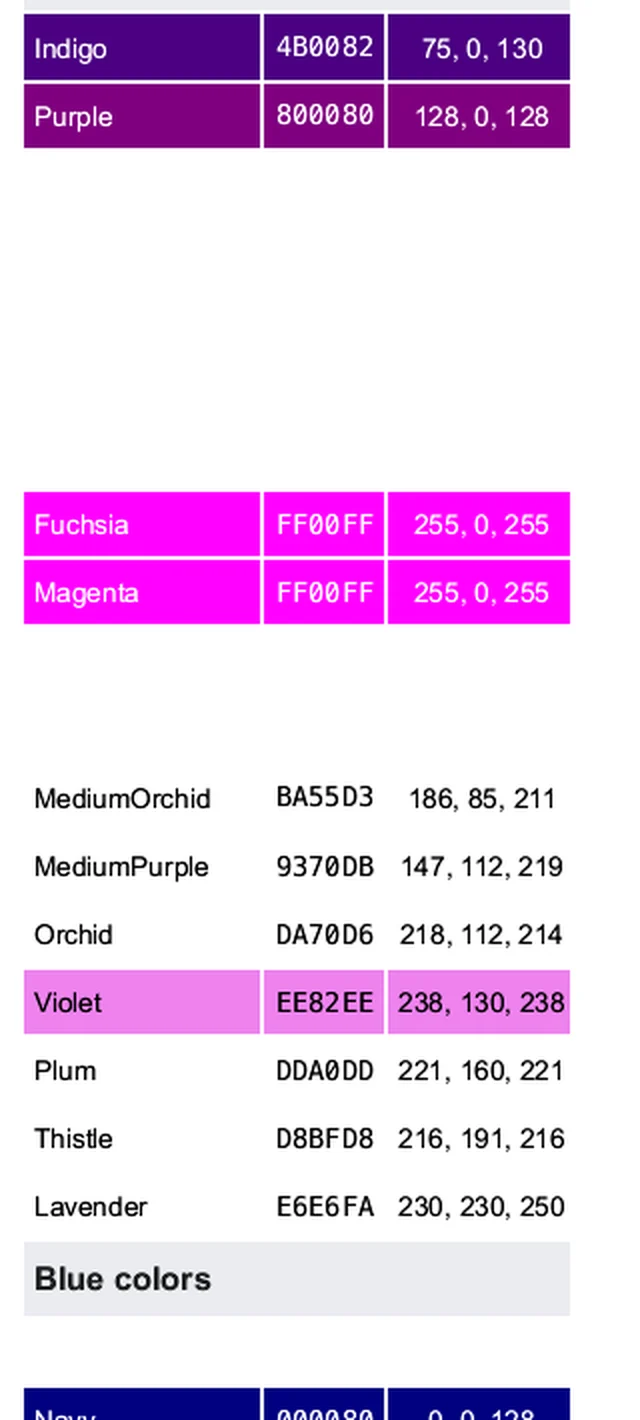

CSS defines 148 colour names, from aliceblue to yellowgreen. Floati knew 48 of them, so a table cell or a button coloured with darkmagenta or papayawhip came out white. All 148 now paint, with exactly the reference browser's values, and the same table is used everywhere the engine reads a colour: pages, SVG and canvas.
The encyclopedia's Web colors table
Japanese and Chinese sites read correctly
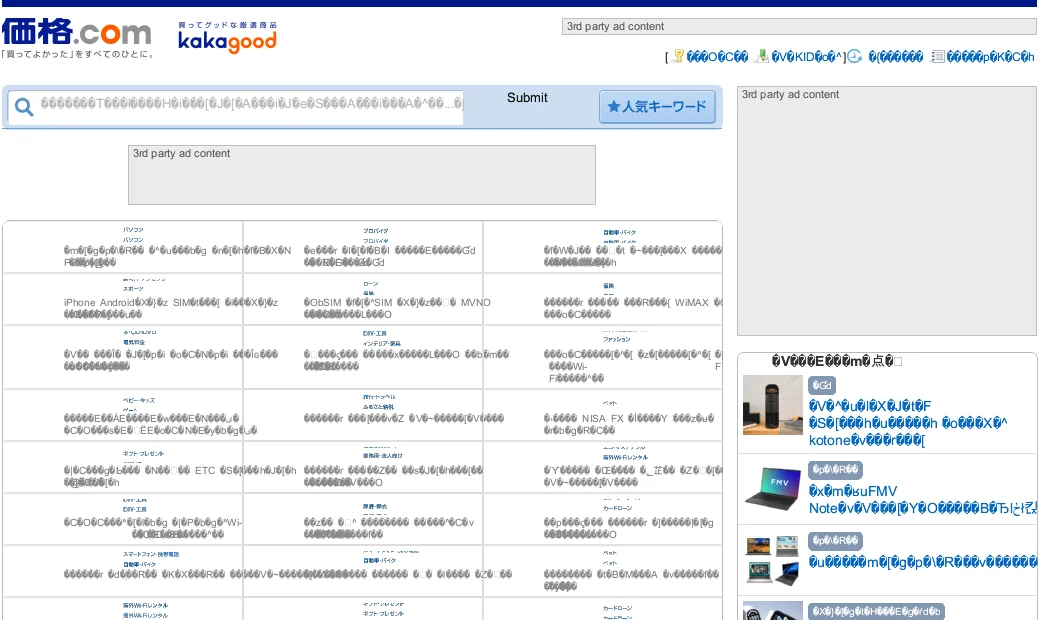
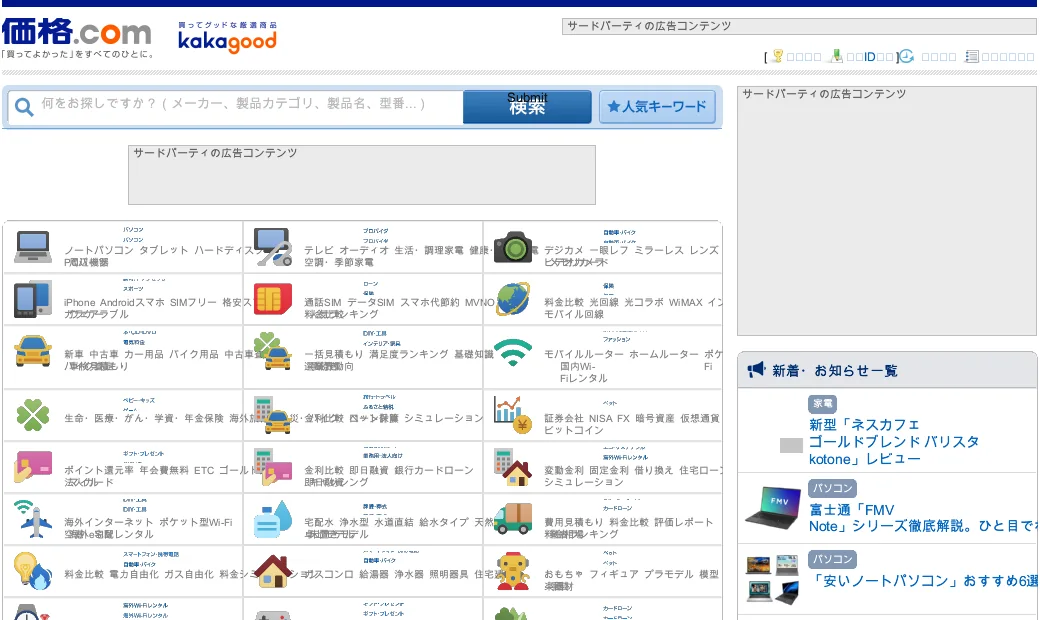
Many Japanese, Chinese and Korean sites still send their pages in older encodings such as Shift_JIS, GBK and Big5. Floati read them as if they were UTF-8 and showed garbled symbols. It now decodes every encoding the web standard lists, written from the standard's own tables: a Japanese price-comparison site shows its menus and products, and a Japanese travel site, which used to crash, renders.
a Japanese price-comparison site
Faster where it counts
Promise work no longer runs ahead of the page's own scripts, each script is parsed once instead of twice, and the CSS engine stops re-reading the same stylesheets every time a component appears. Speed is measured the same way for every change: real pages, loaded many times by the old and new build side by side, with every network response recorded once and replayed so both builds see the same bytes.
Fonts in embedded frames
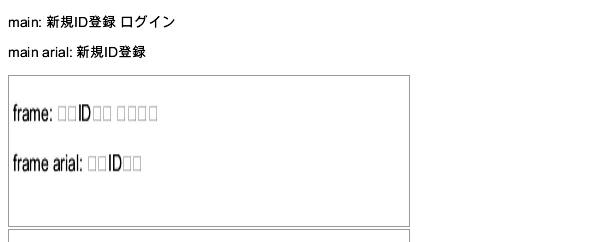
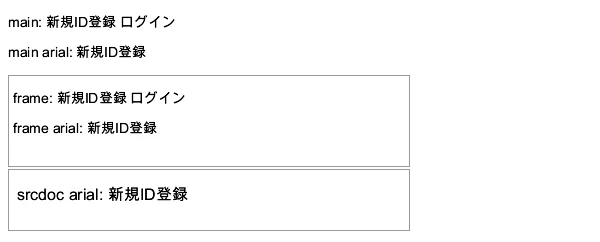
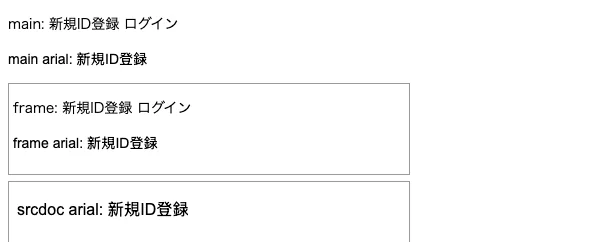
Text inside an iframe used a fallback font list without Japanese or Chinese glyphs, so it showed empty boxes while the same words outside the frame were fine. Frames now get the page's fonts, and a frame sized with CSS gets that size.
the same Japanese text in the page and in frames
Safe HTML, proven
The new Sanitizer API lets a page insert HTML from anywhere without letting scripts in. Beyond matching the reference browser on all 61 checks, Floati proves the guarantee: every build generates two thousand pieces of hostile markup (script tags, event handlers, disguised javascript: links, tricks that only turn dangerous when re-read) and checks that nothing that can run survives, even with every element allowed. Building it uncovered and fixed two HTML parsing bugs that affected ordinary pages too.
Colours you can compute with
Typed CSS values arrive: sizes, numbers and calculations as real objects instead of strings, from both an element's own style and its computed style, matching the reference browser on all 81 checks. On top, Floati ships the next part of that standard, which no browser has yet: colour objects that convert between sRGB, HSL, Lab, LCH, OKLab, OKLCH, Display P3 and XYZ in full precision, proven to agree with the engine's own painter.
Qué cambió
19 cambios- API web y DOMa CSS framework's docs site now loads in about 2 seconds instead of 30, and a code-hosting site in 2.3 instead of 16. The cause was the order work runs in: after each page script, Floati also ran the page's queued message tasks, which the standard keeps for later. React's scheduler and Next.js depend on that order, so they repeated their start-up again and again.
- RenderizadoEvery script is now read once. Pages used to be parsed a second time just to look ahead, so a code-hosting site parsed 14.4 MB of code per visit; it now parses 6.8 MB and its scripts start about twice as fast.
- API web y DOMSites in Japanese, Chinese and Korean encodings (Shift_JIS, EUC-JP, ISO-2022-JP, GBK, gb18030, Big5, EUC-KR and more) show real text instead of garbled symbols, for the page, its scripts, its stylesheets and its data requests. The decoders are written from the web encoding standard's own tables and match the reference browser on 41 of 42 checks; the 42nd is a Big5 character where the reference browser itself does not follow the standard.
- API web y DOMA developer-docs site's script time is about three times shorter (11.6 s down to 3.9 s in our tests). Every time a web component appeared, the CSS engine re-read all of the page's stylesheets, including one copy of the same component sheet per component; each stylesheet is now read once. Selectors such as :is() and :not() are prepared once instead of on every check, and reading one element's style no longer recomputes the whole page on pages that use web components. A CSS framework's docs gain 21% and a code-hosting site 13% from the same work.
- Pestañas e interfazA news site loads in about 20 seconds instead of timing out after 147. An analytics script asks for its settings every few minutes; Floati's page preparation ran every queued timer however far in the future, so that request repeated 134 times in one visit. Timers now stop 30 seconds ahead, as the reference browser's headless mode does, and a request that never answers is no longer waited for again and again.
- API web y DOMEmbedded frames that scripts use heavily are fast: using 500 frames went from 4.4 seconds to 64 milliseconds, because each new frame no longer re-indexes every frame before it.
- RenderizadoAll 148 CSS colour names paint, with exactly the reference browser's values (Floati knew 48: darkmagenta, papayawhip, rebeccapurple and a hundred others came out white). The same full table now serves pages, SVG drawings and canvas.
- API web y DOMText inside iframes uses the page's fonts, so Japanese and Chinese in a frame shows real characters instead of empty boxes, and an iframe sized with CSS width and height takes that size.
- API web y DOMWeb components get a real shadow DOM (the private inner tree a component draws itself with): a ShadowRoot that reports its mode and options, attachShadow with the reference browser's rules and errors, focus inside a component showing up on the component, and getHTML / setHTMLUnsafe to save and load components with their inner trees. The reference browser-matched on 99 of 101 checks.
- API web y DOMStylesheets built in code (new CSSStyleSheet, replace and replaceSync) and shared between components with adoptedStyleSheets now really style the page. Lit, the library a developer-docs site and many design systems build on, switches to this faster path automatically: a developer-docs site's 43 components now share their styles instead of each carrying copies, and the page looks exactly the same. On one point Floati follows the standard where the reference browser keeps an old order by mistake.
- Privacidad y ShieldsSafe HTML: the Sanitizer API, setHTML and Document.parseHTML let a page insert HTML from anywhere with scripts, event handlers and javascript: links removed, matching the reference browser on all 61 checks. Every build also tries 2,000 generated hostile inputs, under the default rules and with everything allowed, and re-reads each result to catch markup that turns dangerous on a second read.
- RenderizadoTwo HTML parsing bugs fixed on the way: a style block that followed an SVG or maths fragment had its CSS read as markup and lost, and the text inside style and script blocks was escaped when a page read it back.
- API web y DOMTyped CSS values (CSS Typed OM): sizes, numbers, keywords and calculations as objects, with unit conversion and maths, from an element's own style and its computed style. Matches the reference browser on all 81 checks, and a law checks that every value of every property reads back exactly as getComputedStyle reports it.
- API web y DOMColour objects ahead of the reference browser (CSS Typed OM Level 2, which no browser ships yet): read any colour as sRGB, HSL, HWB, Lab, LCH, OKLab, OKLCH, Display P3 or XYZ and convert between them in full precision. Proven by round trips through every space and by agreement with the engine's own painter.
- API web y DOMgetComputedStyle answers in the reference browser's form: 0.25 rather than .25, times in seconds (0.25s, not 250ms), lists spaced as a, b, bold as 700, transforms as their matrix and the flex shorthand expanded. 24 of 24 cases match.
- RenderizadoText with broken UTF-16 halves (a lone surrogate) is kept exactly as written rather than replaced, strings sort by UTF-16 unit like every other engine, and regular expressions report positions in UTF-16 units and support the d flag for match indices. 43 of 43 and 25 of 25 checks match the reference browser.
- Memoria y lecturaDocument now has the members the reference browser has (document.fgColor, scrollingElement, rootElement, the fullscreen and visibility aliases and more), page variables no longer leak onto document, and document.defaultView is the window.
- AccesibilidadARIA element references (ariaLabelledByElements, ariaActiveDescendantElement and six more) let accessible components point at the elements that label and describe them, with the same rules as the reference browser.
- RedesMeasurement you can trust: every change is checked on real pages by loading them with the old and the new build side by side, two pages at a time, with each page's network recorded once and replayed so both builds see identical responses. A full check now takes about 20 minutes instead of an hour and a half.
Pruébalo en tu navegador
Cada prueba se ejecuta en vivo en el navegador con el que lees. No se envía nada a ningún sitio.


