Deɛ asesa fi v0.1.293
Biribiara a ɛyɛ foforɔ fi wo version so, wɔ baabi korɔ. Version biara de wo kɔ ne nsɛm nyinaa so.
134Versions
1382Nsesaeɛ
44Ɛwɔ mfonini a wobɛtoto ho
Wɔ asɛmti so
Nɔma no
8660 -> 470 msForced layouts on a recorded code-hosting pagev0.1.427 · Layout reuses what it already worked out8.1 -> 5.3 ms, level with the reference engineRegex row (test, exec, replace)v0.1.427 · Faster script rows6,326 -> 5,128 msScript, style and layout on 11 recorded pagesv0.1.426 · Profile-guided optimization5,379 -> 5,166 msScript, style and layout on 11 recorded pagesv0.1.425 · Whole-program optimization176.7k -> 165.1kLayout steps on a large code-hosting pagev0.1.424 · Reusing measured layout12.2 -> 7.5 msCompile time on the main thread, large code-hosting pagev0.1.423 · Compiling on a background thread10.9 -> 7.6 msBuilding and comparing a 1,000-element tree, 50 timesv0.1.423 · Constants stay inside loops that call1.1 -> 0.88 msA tokenizer over 30 KB of code, 12 timesv0.1.422 · Loops that read text one character at a time
Mfonini
6 / 44 Models that showed nothingv0.1.408
 WebGL 2v0.1.407
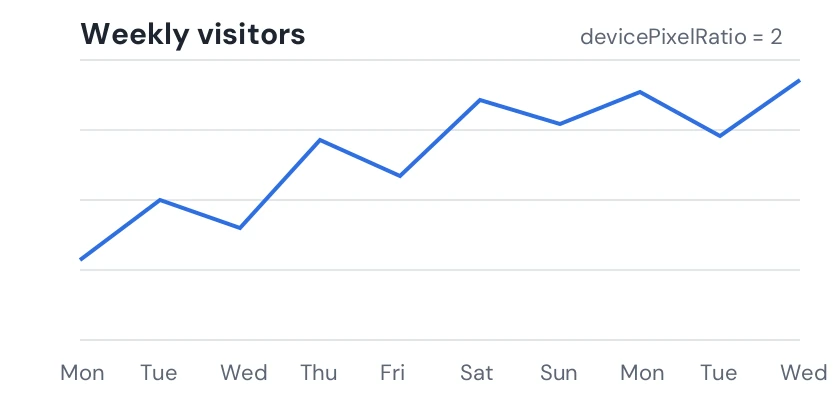 Sharp canvases on retina screensv0.1.407
 A Memory page that only says true thingsv0.1.406
 A stopped page you can readv0.1.406
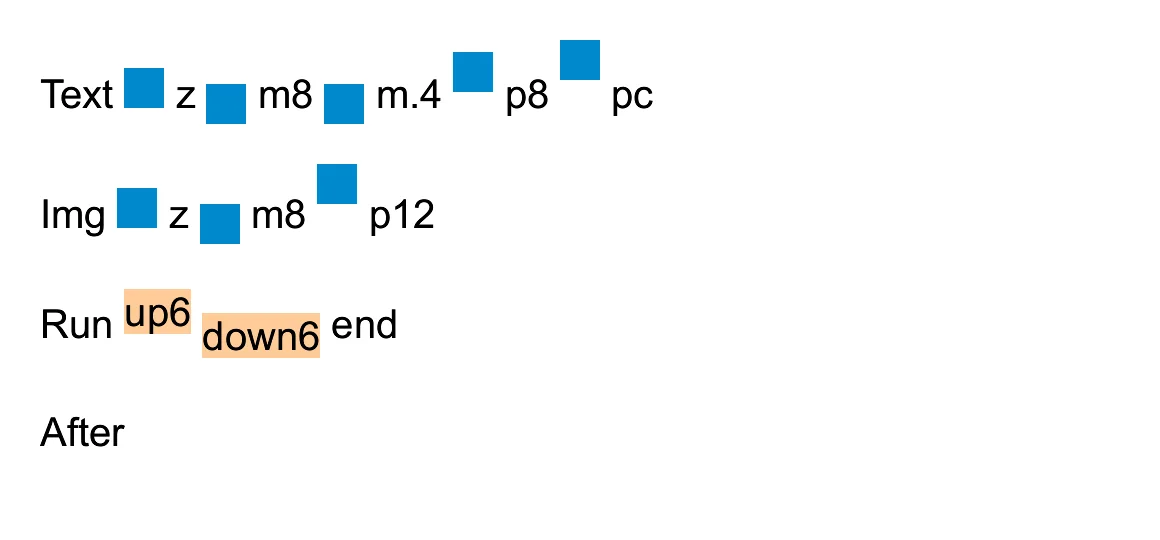 vertical-align with a lengthv0.1.406
Versions nyinaa
134- 0.1.427Layouts that remember their work9
- 0.1.426Compiled with what real pages run1
- 0.1.425Built with whole-program optimization2
- 0.1.424More layout reused after a script changes the page4
- 0.1.423The optimizing compiler works off the main thread5
- 0.1.422Text-reading loops and element-tree builders run faster14
- 0.1.421Calls from loops run inside the loop's own machine code9
- 0.1.420Pages you come back to run their scripts sooner17
- 0.1.419A faster interpreter runs the page's code12
- 0.1.418Scripts run faster on busy pages34
- 0.1.417Pages wait less for their own scripts and styles13
- 0.1.416WebGPU loops run 2 to 3 times faster on Macs4
- 0.1.415WebGPU loops count right on Macs4
- 0.1.414WebGPU runs in its own graphics process6
- 0.1.413A graphics card reset no longer takes the browser down5
- 0.1.412Video moves to the graphics card7
- 0.1.411No canvas stall on Windows, patterns and every blend mode on the graphics card5
- 0.1.410Canvas drawing moves to the graphics card27
- 0.1.409Every tile on the GPU26
- 0.1.4083D at 120 frames a second23
- 0.1.407WebGL 236
- 0.1.406A stuck tab stops at once16
- 0.1.405Small WebGL drawings get smooth edges6
- 0.1.404WebGL pages finally move25
- 0.1.403WebGPU is here35
- 0.1.402A canvas that moves itself to the GPU8
- 0.1.40199% of real pages decided by the GPU9
- 0.1.400Smooth turns, the same bytes on every chip, and fields that keep their text15
- 0.1.399Animations on the GPU compositor, and text that stays in its box22
- 0.1.398Gradient patterns that tile, animations that keep up, and a much faster canvas14
- 0.1.397Transitions that ease, and a GPU that draws 94% of real pages itself8
- 0.1.396Animations on the GPU compositor, and spinners that spin as arcs7
- 0.1.395Carousels that fade, badges that stay put, and floats that stay inside12
- 0.1.394Background images over their colour, interlaced pictures, and borders in every colour6
- 0.1.393Style sheets in page order, and symbols that fall back like macOS4
- 0.1.392Icon fonts loaded by script, and colour emoji on Windows2
- 0.1.391Emoji in colour, sized as in the reference browser3
- 0.1.390A classified ads site's front page: blank before, whole now12
- 0.1.389A computer maker's home page: navigation labels back, buttons apart5
- 0.1.388A space agency's home page, a news section and a language site's header now match the reference18
- 0.1.387News pages line up: a news site from 19.9% to 10.9% different5
- 0.1.386Real sites render closer to the reference browser14
- 0.1.385Ahead of the reference runtime on 7 of 8 workloads32
- 0.1.384Safety review, a rare crash fixed, functions compiled sooner46
- 0.1.383JavaScript ahead of the reference runtime on six of eight speed tests36
- 0.1.382Closed tabs give their memory back, and XML pages read as XML12
- 0.1.381Lighter script code, and calls between scripts that run as ordinary calls15
- 0.1.380Scrolling boxes scroll, pages look right, and scripts from other sites need permission16
- 0.1.379Pages laid out the way their authors wrote them, and less memory again22
- 0.1.378Other sites' data stays private, and less memory again8
- 0.1.377About half the memory of the reference browser on everyday sites15
- 0.1.376A minimized window stops piling up graphics memory5
- 0.1.375Closed pages let go, sites stay apart, and fonts stop costing memory9
- 0.1.374A floating video you can move, that opens without a black flash8
- 0.1.373Every page on our own engine, two pages side by side, videos that keep playing, and your own clock17
- 0.1.372Your data stays put, your choices stick, and dictation that really listens6
- 0.1.371Drop files onto pages, dictate without your voice leaving the Mac, and controllers that rumble6
- 0.1.370Open your files, share to your phone, have pages read aloud, install sites as apps, play with a controller, and accented text drawn right11
- 0.1.369Passkeys with Touch ID and Windows Hello, sites that work offline, notifications you allow, and devices asked for first, all kept on your device9
- 0.1.368A site's own security rules are kept the whole time the page runs, Trusted Types, a map of every unsafe write in DevTools, and animations from script8
- 0.1.367Events, form controls, performance timing, URL patterns, live streams and the newest JavaScript: the Web APIs score rises from 59 to 6210
- 0.1.366Events, custom form controls, fonts and navigation work the way the web standards say: the Web APIs score rises from 53 to 599
- 0.1.365The code-size budget fits your processor, and code that has gone cold makes room for code that is hot now3
- 0.1.364Compiled code that fits the processor's caches: big pages up to 1.8 times faster, and fast compiled code on Windows and Intel machines5
- 0.1.363Thermal runs on one code generator, building strings is up to 8 times faster, and two slow paths that grew with the square of their input are linear12
- 0.1.362A page scheduler that stalled now runs, try / finally and spreads compile, and deleting thousands of properties is 180 times faster7
- 0.1.361Thermal runs on Windows and Intel machines, a register fix for compiled code on Windows, try / catch compiles, and reading a growing string is 200 times faster7
- 0.1.360Every byte of machine code is Floati's own, a news site that showed blank renders, Gust's code is half the size, and closures and ?? compile9
- 0.1.359Thermal reads object members and folds Math, string building compiles, and methods, Array subclasses and globals behave as the standard says7
- 0.1.358Thermal, Floati's own optimizing compiler, is on: hot loops keep their numbers and strings in registers6
- 0.1.357Loops that test a number run as machine code, more of your functions compile, and reading page nodes is three times faster14
- 0.1.356Recursion makes a fraction of the calls, loops keep objects in registers, and element writes stop searching8
- 0.1.355A hot loop changes compiler without stopping, property writes skip the detour, and pure recursion remembers its answers6
- 0.1.354Floati compiles JavaScript with its own compiler, Updraft: about a hundred times faster to compile, and compiled code no longer piles up7
- 0.1.353Style matching tries a third of the rules, queries prepare their selector once, sibling walks stay fast5
- 0.1.352Code that loads on demand starts at once, images decode beside their downloads, writes run compiled10
- 0.1.351Styles read once, layouts redone only where they changed, built-ins in compiled loops12
- 0.1.350Helpers that compile, strings that stay small, and events that fire fast14
- 0.1.349Scripts that grow in step with their work, layouts laid out once, and colours mixed like the reference13
- 0.1.348Scripts that only compile when it pays, cards that line up, and bold that stays bold14
- 0.1.347Cards inside links, small print at its real size, and errors you can follow17
- 0.1.346A real performance timeline, site icons from the engine with a lookalike check, and forms that lay out right14
- 0.1.345Real WebGL, a real 2D canvas, and canvas text that matches the reference browser10
- 0.1.344Retina text that keeps its spacing, embeds at their real size, and an address bar that keeps up7
- 0.1.343Sign-ins that stay signed in, a real IndexedDB, and a storage button that shows what sites keep25
- 0.1.342Theme switchers, chart labels sized by CSS, and SVG text you can measure8
- 0.1.341Canvas text measured and drawn like the reference browser, and SVG shapes you can measure6
- 0.1.340Scripts can read and change SVG the way they do in the reference browser, and a hidden hang is gone10
- 0.1.339Every computed style, real stylesheet objects and full 3D geometry, each checked against the reference browser12
- 0.1.338Pages load faster, render truer and gain a dozen modern web features, each one checked against the reference browser19
- 0.1.337Sites load like they do in the reference browser: every test site runs its scripts cleanly11
- 0.1.336Site controls that do what they say: permissions that really ask, and Shields per site13
- 0.1.335A developer-docs site works like the reference browser, and every frame gets its own built-ins12
- 0.1.334Iframes that cost what a paragraph costs, live selections, and rounder corners10
- 0.1.333Fewer script errors on real sites, and finished pages give all their memory back10
- 0.1.332Pinned tabs on the left or the right, and an honest measure of the web platform9
- 0.1.331A crash on busy news sites fixed, and pages lighter on the processor5
- 0.1.330JavaScript scores 100, and big pages stop stuttering when they clean up11
- 0.1.329The JavaScript engine proves what it can skip9
- 0.1.328JavaScript runs at the reference browser's speed on 41 of our 42 measured workloads7
- 0.1.327Loops keep their speed when a helper ignores an argument, and JavaScript behaves more like the reference browser6
- 0.1.326Recursive code calls itself directly, and building text in a loop beats the reference browser3
- 0.1.325Deep recursion runs like it does in the reference browser3
- 0.1.324Long nested loops run to the end, and reading long text is fast2
- 0.1.323JavaScript measured at 94, JSON three times faster, and a round of fixes found against the reference browser11
- 0.1.322Closed pages give their memory back whole, and JavaScript measured at 8711
- 0.1.321Half the memory, and JavaScript measured at 8014
- 0.1.320Pages no longer freeze while a script waits on the network8
- 0.1.319A PDF viewer that does what Acrobat Pro charges for16
- 0.1.318Floati engine pages work with screen readers9
- 0.1.317Closer to the reference browser, and no more address bar tricks6
- 0.1.316Utility-CSS sites get their spacing back2
- 0.1.315Empty boxes stop pushing pages down2
- 0.1.314Utility-CSS sites stop stacking their lines on top of each other2
- 0.1.313A large encyclopedia and a news site now sit where the reference browser puts them7
- 0.1.312The window is finally just the window2
- 0.1.311Text now lines up with the reference browser's to a fraction of a percent5
- 0.1.310Pages stay alive, repaints never block your scroll, and type matches the reference browser's10
- 0.1.309Pages arrive like they do in the reference browser, in a fraction of the memory13
- 0.1.308Pages drawn by your graphics card, and scrolling that never waits5
- 0.1.307Long videos play all the way through on Windows too3
- 0.1.306Video that plays the whole way through, smoothly5
- 0.1.305Streaming video that adjusts to your connection5
- 0.1.304Sound and video, decoded by our own code5
- 0.1.303HTTP/3 is on, and it is ours: the fastest web protocol, built from scratch3
- 0.1.302The site you open stays your business, and the browser checks every certificate itself4
- 0.1.301Sites can no longer follow you between other sites, and the next page starts sooner3
- 0.1.300Reads the newest web compression, reuses secure connections, and remembers where sites live3
- 0.1.299Pages start loading sooner: smarter connections and a faster path onto slow networks3
- 0.1.298More number-crunching loops run several values at once, now on Windows and Intel Macs too, and faster than the reference browser3
- 0.1.297Setting up and filling arrays of numbers is now several times faster, and faster than the reference browser3
- 0.1.296Number-crunching loops over images, audio and data now run several values at once, faster than the reference browser on this kind of work4
- 0.1.295Class-based JavaScript runs dramatically faster: calling a method through a list of objects is now many times quicker4
- 0.1.294Integer, bitwise and pixel-processing JavaScript runs a lot faster, and the browser still proves every shortcut before it trusts it4















