Die Versionshinweise sind auf Englisch geschrieben.
Scrolling boxes scroll, pages look right, and scripts from other sites need permission
A correctness, speed and safety release. A box a page scrolls with a script (a carousel, a chat that jumps to its newest message, a long list that shows only what is on screen) now actually moves: before, the page could set the scroll position and read it back, but nothing on screen changed. Several things pages draw now look the way they should: code example cards keep their shadow, citation numbers sit raised like superscripts, a column beside a float starts where the page says, and a list item drawn as a tag pill no longer shows a stray bullet. Pages that measure themselves while they run do much less work: on pages built from web components or container queries, a change now re-lays out only what it touched, and reading styles skips most of the work for properties an element does not have. A module script from another website now runs only when that website allows it, as every browser requires. And pictures and video take less memory: a large video is kept at the size it is shown, and carousel slides beside the screen give their memory back until they slide in.
Citation numbers are superscripts again
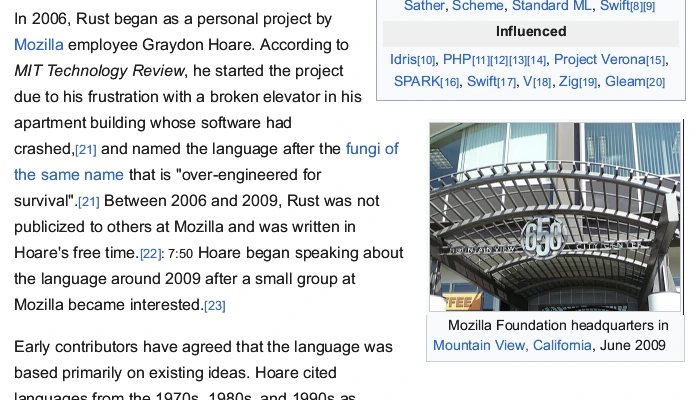

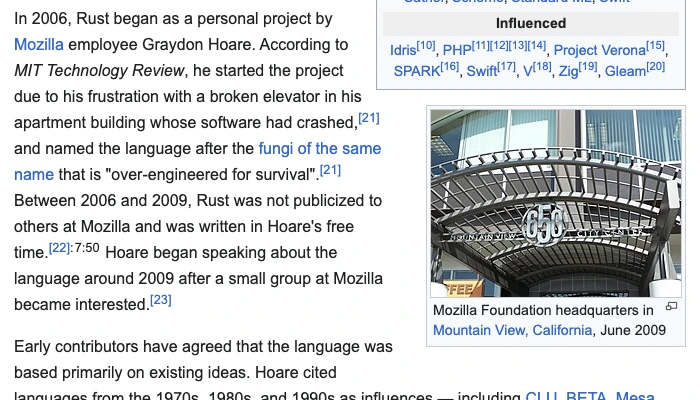
An encyclopedia marks every citation with a small raised number in brackets. The number is a link inside a superscript, and Floati raised only text sitting directly inside the superscript, so every citation sat on the line like normal text (slightly low, even) and paragraphs wrapped differently from the reference browser. A superscript now raises everything inside it, and its line grows to make room, as in the reference.
An encyclopedia article: Floati 0.1.379, Floati 0.1.380 and the reference browser. The citation numbers are raised now.
Code cards keep their shadow
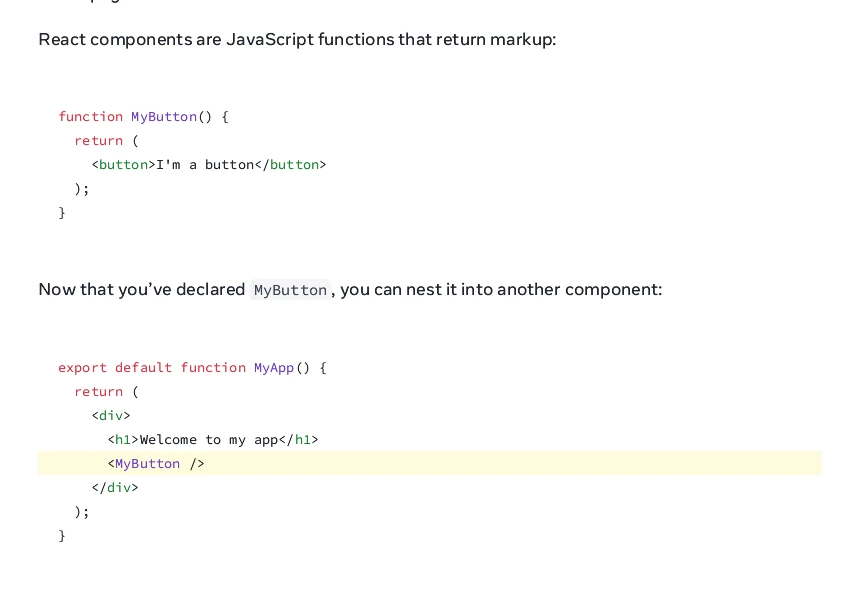
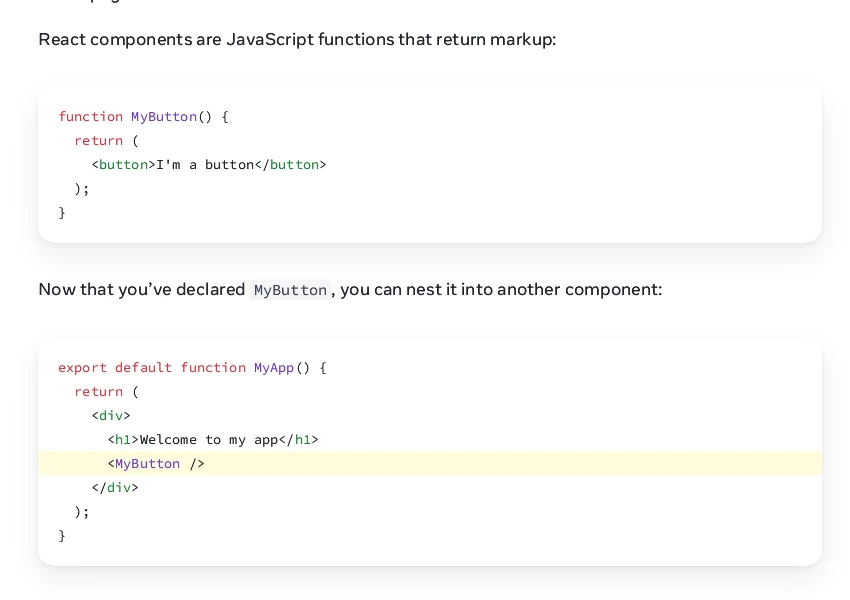
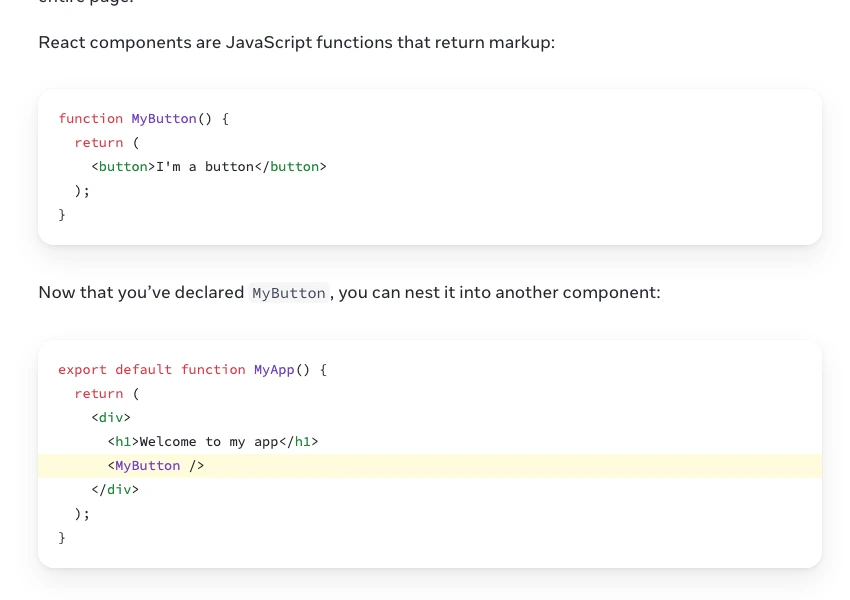
A documentation site shows every code example on a white card lifted by a soft shadow. The card scrolls sideways when the code is wide, so it clips what is inside it, and Floati clipped the card's own shadow along with its content: the cards vanished into the white page. A box's shadow belongs to the box, not to what it holds, so it is now drawn outside the clip. Found the same way: a column next to a floated box shrank its lines by the whole float even when its margin already cleared it (a link site's titles sat 30 pixels too far right), and a list item drawn as a tag pill showed a bullet.
A documentation site's code examples: Floati 0.1.379, Floati 0.1.380 and the reference browser.
Less work when pages measure themselves
Many pages ask the browser where things are while their scripts run, and each question can mean laying the page out again. Floati already re-lays out only what changed on most pages, but it gave up entirely on two common kinds: pages built from web components, and pages that use container queries. A code editor that moved its cursor relaid out a whole documentation page on every keystroke. Now a change inside a web component re-lays out only the part it touched, an editor's cursor layer is laid out again on its own, and a container-query page keeps the fast path as long as no container changes size. Separately, reading a style property an element does not have (most of the millions of reads a layout makes) no longer costs a lookup. Each of these is checked against a full layout on real pages.
Other sites' module scripts need their permission
A page can load scripts from other websites. A modern 'module' script from another site may only run when that site says so, in a header on its reply; Floati ran them regardless. It now checks, and for servers that answer only when asked properly it asks the way the reference browser does, so the sites that allow it keep working.
Pictures and video take less memory
A hero video is often 4K but shown in a box a few hundred pixels wide; Floati kept every shown frame and its poster at full size. They are now kept at the pixels the box needs (a page drawing the video onto a canvas still gets it at full size). And a carousel's other slides, sitting just beside the screen, now give their memory back until they slide in. A government site went from 167 to 146 MB and a chipmaker's site from 200 to 157 MB. On the 33 random sites the total moves more between visits than this release changes it (a few sites load a much heavier version on some visits), so these are per-site measurements, each with the change on and off.
Was sich geändert hat
16 Änderungen- DarstellungA box a script scrolls (scrollLeft / scrollTop) now moves on screen, and scripts measuring where things are inside it get the scrolled positions. Carousels, chats that jump to the newest message and long lists that draw only what is visible depend on this.
- DarstellungCitation numbers and other links inside a superscript are raised with it, and the line makes room, so footnote markers look like superscripts again and paragraphs wrap as in the reference.
- Web-APIs und DOMAn element that clips its content (a code card that scrolls sideways) still casts its own shadow: the shadow belongs to the box, not to what is inside it.
- DarstellungA column next to a floated box starts at its own edge when its margin already clears the float, instead of being pushed in by the float a second time (a link site's titles sat 30 pixels too far right).
- DarstellungOnly real list items get a bullet; a list item drawn as a pill or an inline box gets none.
- Tabs und OberflächeOn pages built from web components, a change to a floating layer (a menu, a popup, an editor's cursor) re-lays out only that layer instead of the whole page.
- DarstellungOn pages built from web components, adding content re-lays out only around what was added, unless it changes a component's slots or its host.
- DarstellungPages that use container queries keep the fast re-layout path as long as no container changes size; before, every change laid out the whole page. A code host's forced layouts take about 15 percent less time.
- DarstellungA box that moves to a new place with nothing else about it changed reuses its stored layout, shifted, instead of being laid out again.
- DarstellungAsking an element for a style it does not have (most of the millions of style reads in a layout) is answered without a lookup: 10 to 15 percent less layout time.
- Datenschutz und ShieldsA module script from another website runs only when that website allows it, in the header of its reply, as every browser requires.
- Datenschutz und ShieldsFor servers that only grant that permission when asked properly, Floati now asks the way the reference browser does, so the sites that allow it keep working.
- Gedächtnis und LesenA video and its poster are kept at the pixels their box shows, not at the file's full 4K size (a page drawing the video onto a canvas still gets it full size). A government site went from 167 to 146 MB.
- Gedächtnis und LesenCarousel slides sitting just beside the screen give their memory back until they slide in: only pictures overlapping the page's width count as near. A chipmaker's site went from 200 to 157 MB.
- DarstellungOur speed measurement now holds both browsers to the same cross-origin rules, so the gap we report is the honest one.
- Tabs und OberflächeRelease pictures can now render the previous version of Floati from its own build, so every before / after slider compares real releases.





