Scrolling boxes scroll, pages look right, and scripts from other sites need permission
A correctness, speed and safety release. A box a page scrolls with a script (a carousel, a chat that jumps to its newest message, a long list that shows only what is on screen) now actually moves: before, the page could set the scroll position and read it back, but nothing on screen changed. Several things pages draw now look the way they should: code example cards keep their shadow, citation numbers sit raised like superscripts, a column beside a float starts where the page says, and a list item drawn as a tag pill no longer shows a stray bullet. Pages that measure themselves while they run do much less work: on pages built from web components or container queries, a change now re-lays out only what it touched, and reading styles skips most of the work for properties an element does not have. A module script from another website now runs only when that website allows it, as every browser requires. And pictures and video take less memory: a large video is kept at the size it is shown, and carousel slides beside the screen give their memory back until they slide in.
Citation numbers are superscripts again
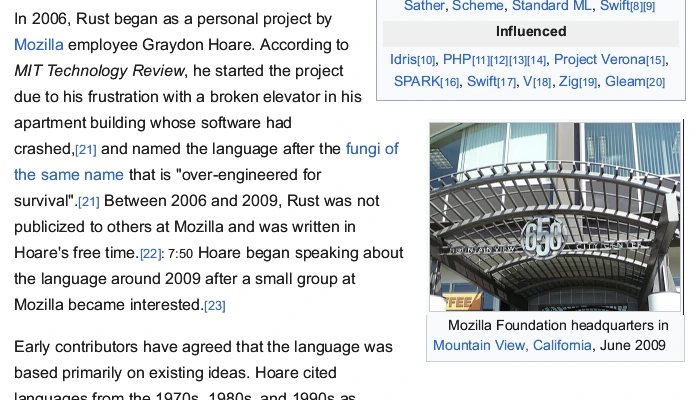
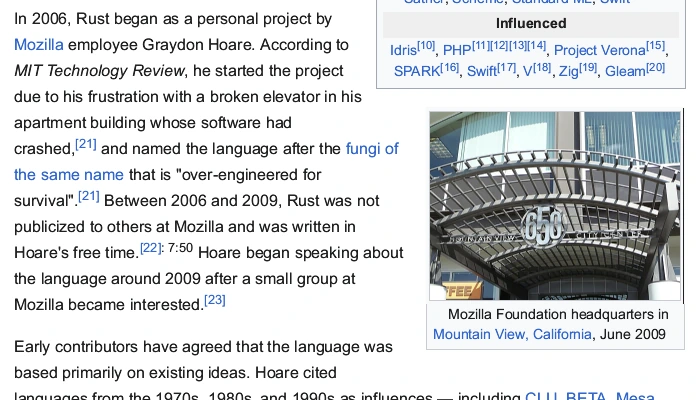
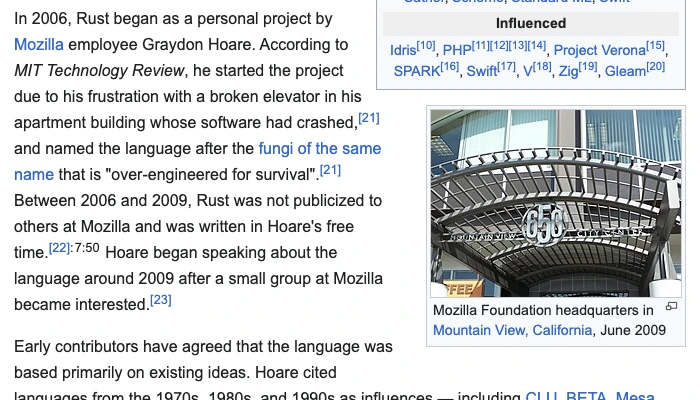
An encyclopedia marks every citation with a small raised number in brackets. The number is a link inside a superscript, and Floati raised only text sitting directly inside the superscript, so every citation sat on the line like normal text (slightly low, even) and paragraphs wrapped differently from the reference browser. A superscript now raises everything inside it, and its line grows to make room, as in the reference.
Code cards keep their shadow
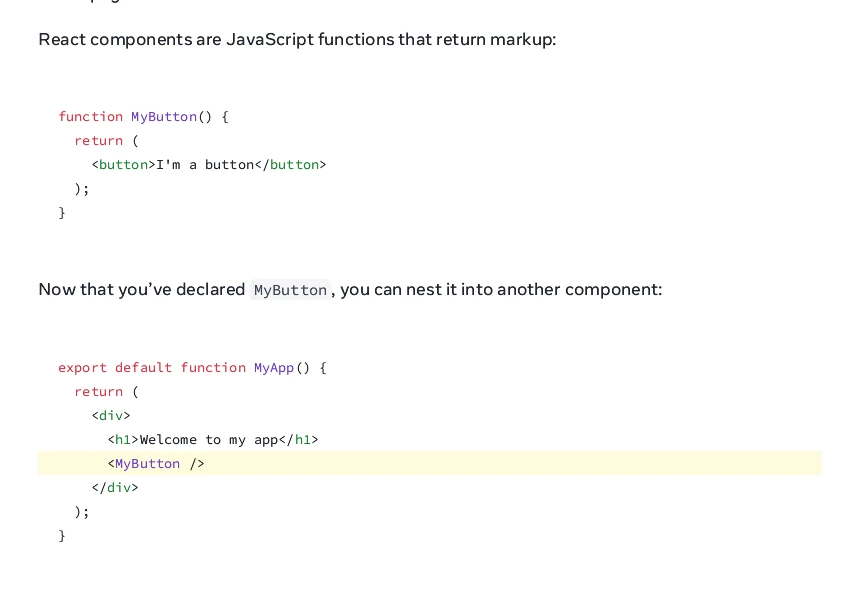
A documentation site shows every code example on a white card lifted by a soft shadow. The card scrolls sideways when the code is wide, so it clips what is inside it, and Floati clipped the card's own shadow along with its content: the cards vanished into the white page. A box's shadow belongs to the box, not to what it holds, so it is now drawn outside the clip. Found the same way: a column next to a floated box shrank its lines by the whole float even when its margin already cleared it (a link site's titles sat 30 pixels too far right), and a list item drawn as a tag pill showed a bullet.
Less work when pages measure themselves
Many pages ask the browser where things are while their scripts run, and each question can mean laying the page out again. Floati already re-lays out only what changed on most pages, but it gave up entirely on two common kinds: pages built from web components, and pages that use container queries. A code editor that moved its cursor relaid out a whole documentation page on every keystroke. Now a change inside a web component re-lays out only the part it touched, an editor's cursor layer is laid out again on its own, and a container-query page keeps the fast path as long as no container changes size. Separately, reading a style property an element does not have (most of the millions of reads a layout makes) no longer costs a lookup. Each of these is checked against a full layout on real pages.
Other sites' module scripts need their permission
A page can load scripts from other websites. A modern 'module' script from another site may only run when that site says so, in a header on its reply; Floati ran them regardless. It now checks, and for servers that answer only when asked properly it asks the way the reference browser does, so the sites that allow it keep working.
Pictures and video take less memory
A hero video is often 4K but shown in a box a few hundred pixels wide; Floati kept every shown frame and its poster at full size. They are now kept at the pixels the box needs (a page drawing the video onto a canvas still gets it at full size). And a carousel's other slides, sitting just beside the screen, now give their memory back until they slide in. A government site went from 167 to 146 MB and a chipmaker's site from 200 to 157 MB. On the 33 random sites the total moves more between visits than this release changes it (a few sites load a much heavier version on some visits), so these are per-site measurements, each with the change on and off.