Smooth turns, the same bytes on every chip, and fields that keep their text
A release about getting things right, not just getting them on the GPU: all 20 animation test pages now run on the compositor, turned boxes have smooth edges at rest and in motion, rotated frames are the same bytes on the processor, Apple Silicon and DirectX 12, form fields keep their text inside them, and a timer set during page load finally waits its full time. 15 changes, each with its own law in the test gate. The GPU row moves 62 to 65 on the measured animation test, now 20 of 20 pages; the overall score holds at 74.
Form fields that keep their text in
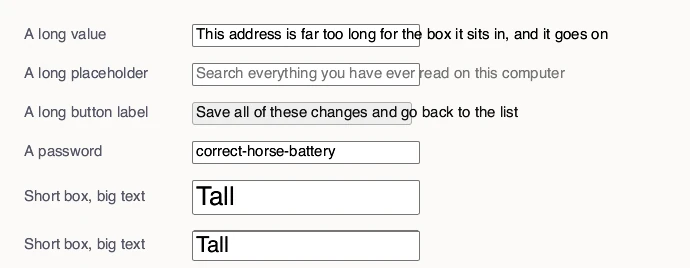


A long address, a long placeholder or a long button label ran straight out of its box and across the page. Worse, a password field drew its letters in plain text. A field's value now stays inside it, a password is dots whatever the page does, and a height the page asks for is the height it gets.
Smooth edges, at rest and while turning
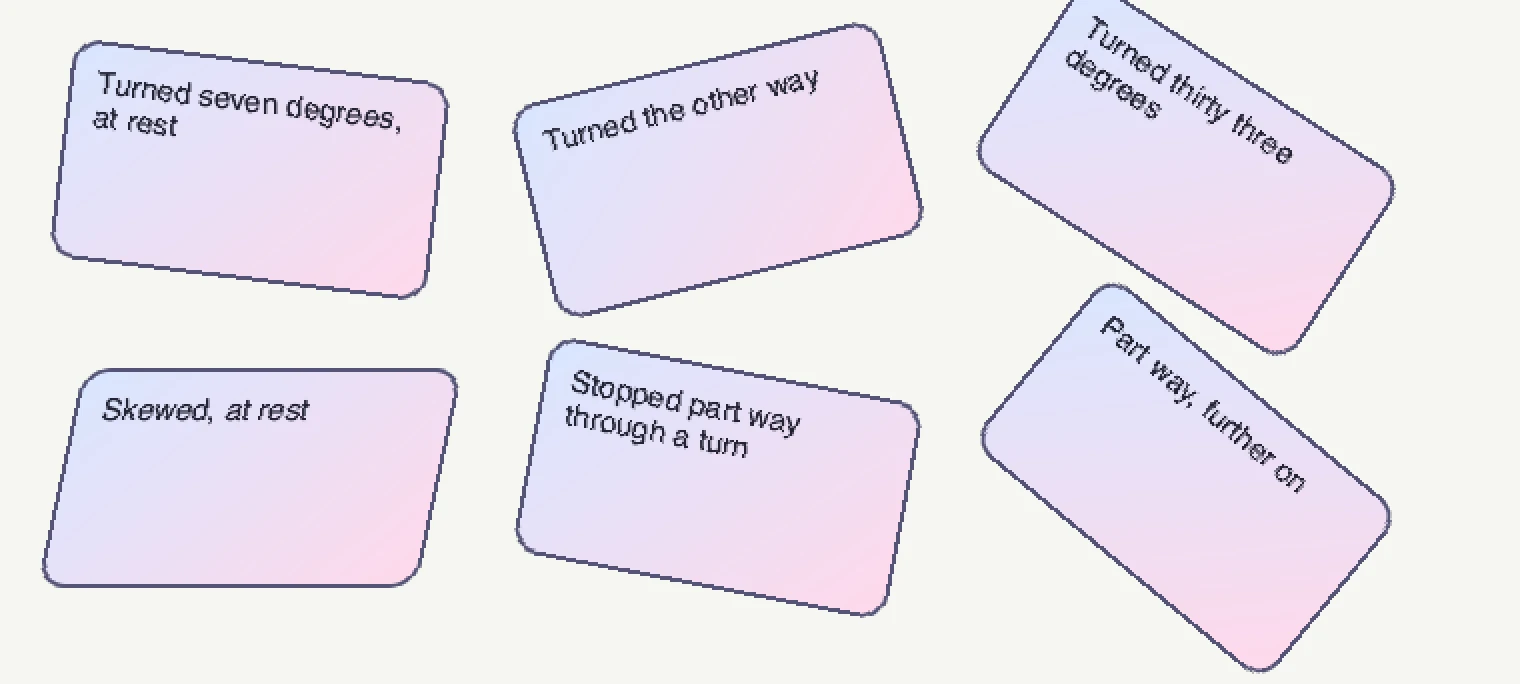
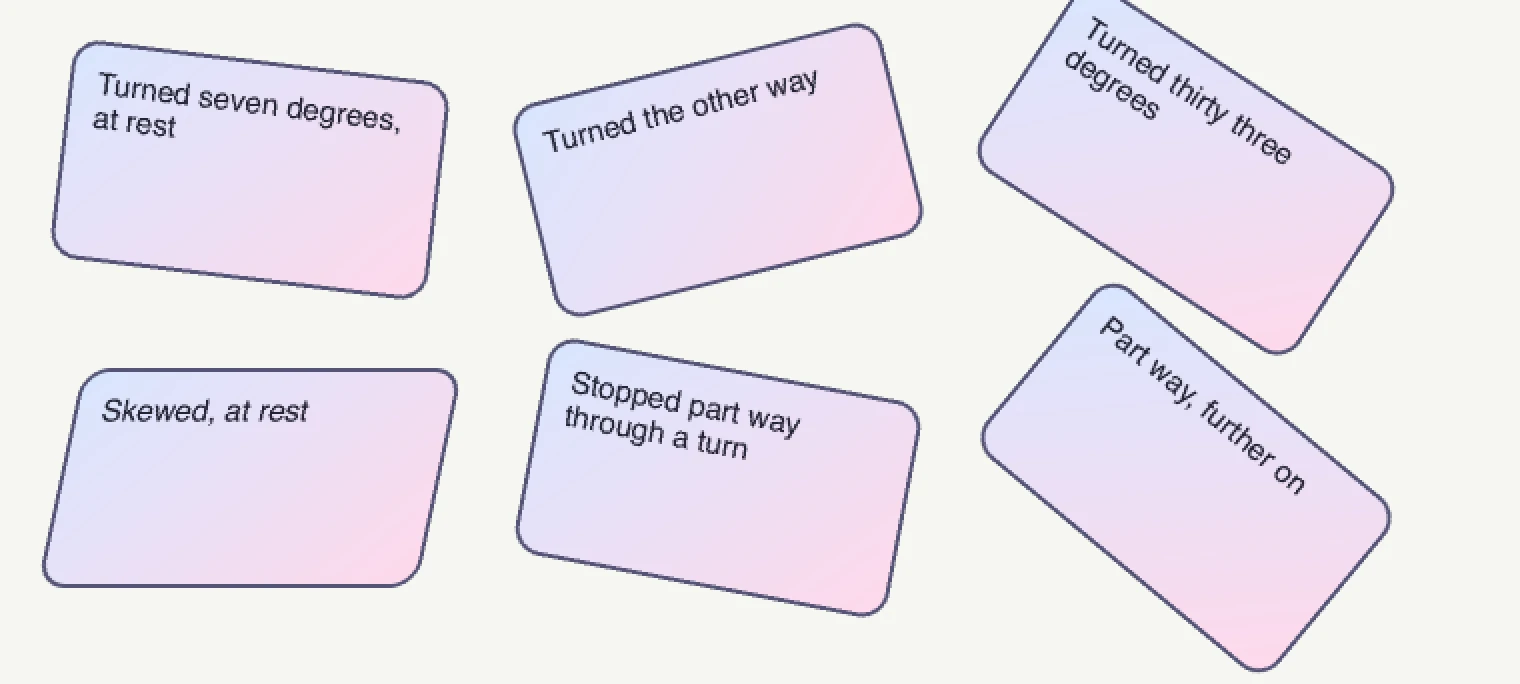
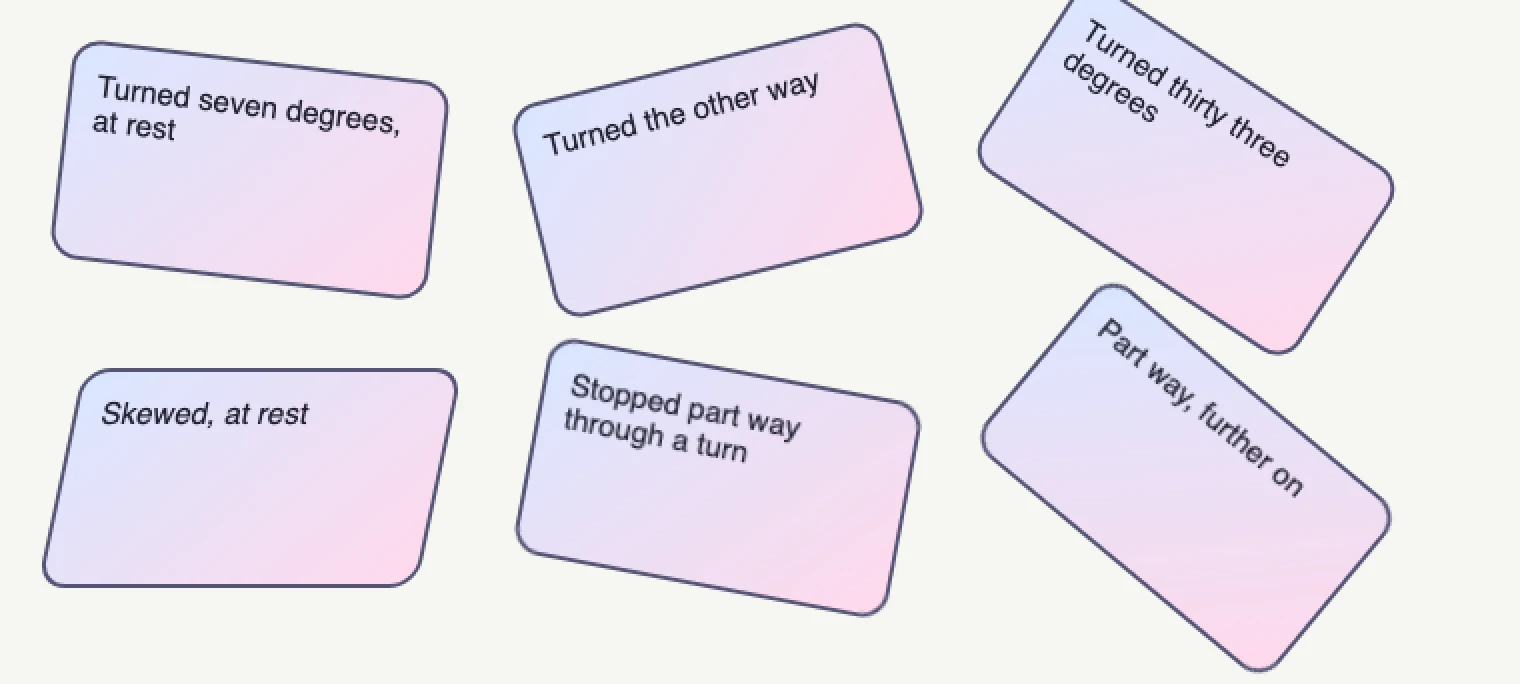
A rotated box was drawn at its own size and turned afterwards, one sample per pixel, so its edges stair-stepped and its text crawled. It is now drawn at twice the size and sampled four times a pixel, and a running rotation uses that same path, so a card looks the same stopped and spinning. It costs less than before, because the compositor does the turning.
The same bytes on every chip
Graphics chips round decimal arithmetic differently, so a turned frame could differ a little from one to the next. Our repaired Windows test caught it. Rather than widen the allowed difference, we took decimals out of the sum: turning and skewing need no division, so they can be done in whole numbers, the same steps in software and on the GPU. A rotated frame is now identical byte for byte on the processor, Apple Silicon and DirectX 12. True perspective still needs division, so it keeps its limit: at most 0.1% of pixels, by at most 3 levels.
Every animation page on the compositor
The last of our 20 animation test pages was an animated frosted panel, which needs a picture of the page behind it for every frame. That picture is now one layer, blurred per frame by GPU passes under the panel's rounded shape, so the panel keeps up with the display and the engine sleeps. We also checked it does not leak: five minutes of about 120 real page changes across these pages stayed flat at about 450 MB, GPU memory included.
A timer that waits
While a page loads, its timers ran on a clock that could leap up to 30 seconds ahead, so a page you were looking at saw a 2.5 second delay end almost at once. Splash screens vanished, delayed prompts appeared immediately and timed redirects jumped. A page on screen now keeps real time as it loads.