Alle Versionen v0.1.3973 Nov 2026Darstellung, Web-APIs und DOM Feed

Die Versionshinweise sind auf Englisch geschrieben.

Transitions that ease, and a GPU that draws 94% of real pages itself

A GPU and animation release: CSS transitions now run, animation frames the engine draws now reach the screen, and on real sites the GPU now decides the colour of 94% of the page itself, up from 69%, still pixel for pixel what software draws. 8 changes, each checked against the reference browser or the software renderer.

first and last only -> every engine frameColour frames shown during a 1.2 s transition
69.3% -> 94.2%, every page pixel-identicalGPU-decided share, 24 real sites
Highlights2

Hover and script changes now ease

VorherNachher
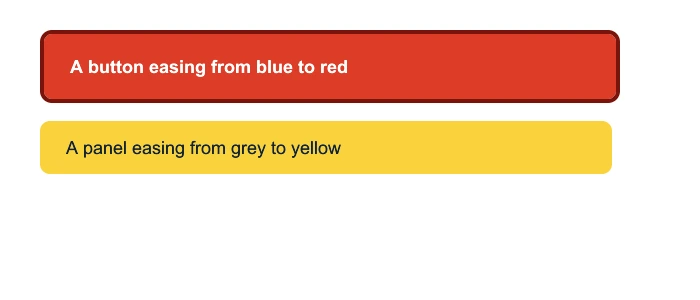
Vorher: One second into a two-second colour transition: Floati without transitions (it jumped to the end), Floati 0.1.397, and the reference browser.
Vorher
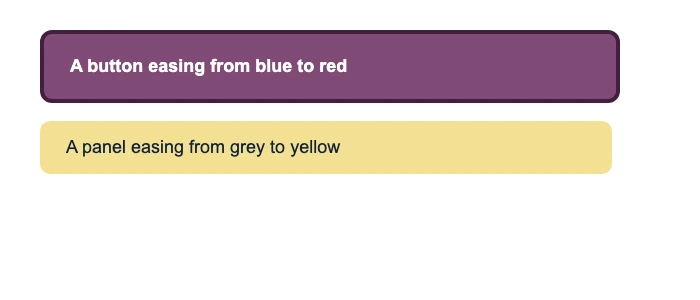
Nachher: One second into a two-second colour transition: Floati without transitions (it jumped to the end), Floati 0.1.397, and the reference browser.
Nachher · v0.1.397
Dieselbe Seite im Referenzbrowser
Referenzbrowser

CSS transitions were read and never played: a button that should fade from blue to red over a second just switched. They now run. Background, border, outline and decoration colours ease on the engine, opacity and transform transitions play on the GPU compositor at the display's own rate, and a hover that is reversed half way turns back from the colour on screen. Testing this in the app also turned up a bug that hid animation frames: when a page timer read the layout during the engine's tick, the new frame was taken for an unchanged one and never shown.

One second into a two-second colour transition: Floati without transitions (it jumped to the end), Floati 0.1.397, and the reference browser.

Colour frames shown during a 1.2 s transitionfirst and last only -> every engine frame

The GPU decides 94% of real pages itself

Floati's GPU drawing is held to one rule: every pixel must be exactly what the software renderer draws. Until now that meant the processor still computed the colour of many pixels and the GPU only blended them: bold and underlined text, background images, box shadows, rounded boxes with mixed corners, and every shrunk photo. Each of these is now drawn by the GPU itself, still pixel for pixel. Shrunk photos needed a trick: averaging pixels is exact in whole numbers, and the one division, which GPUs do not round exactly, is reproduced exactly in whole numbers. Across 24 well-known sites the share of the page whose colours the GPU decides went from 69 to 94 percent, and every page stayed identical to software drawing on Apple Silicon and DirectX 12 alike.

GPU-decided share, 24 real sites69.3% -> 94.2%, every page pixel-identicalA news site with many photos67.5% -> 98.9%A page tiled with a background image0% -> 90.8%

Was sich geändert hat

8 Änderungen
  1. DarstellungCSS transitions now run. A hover or a script that changes a transitioned property used to jump straight to the new value; background, border, outline and decoration colours now ease from the colour on screen to the new one (a reversed hover turns back from where it is), and opacity and transform transitions play on the GPU compositor at the display's rate. Text colour and layout properties are next.
  2. Web-APIs und DOMFIX: animation and transition frames the engine drew were sometimes never shown. When a page timer read layout during the engine's tick, the new frame was taken for an unchanged one, so a colour transition showed only its first and last frames.
  3. DarstellungGPU: bold, italic and underlined text is drawn by the GPU from the glyph cache, underline gaps around descenders included, where every pixel was computed on the processor first.
  4. DarstellungGPU: background images at or above their natural size, repeated or not, are drawn by the GPU from the image itself. Pages tiled with a small background went from 0 to 90 percent of their tiles decided on the GPU.
  5. Web-APIs und DOMGPU: outer box shadows are drawn by the GPU, with the processor computing only the rounded corners and the edge where the shadow meets its box.
  6. DarstellungGPU: shrunk images (most photos on news sites) are drawn by the GPU and stay pixel-identical: the averaging is exact whole-number arithmetic, and the one division is reproduced exactly in whole numbers, since GPU division is not exact.
  7. DarstellungGPU: rounded boxes with different corner radii are drawn by the GPU, the processor computing only their corners.
  8. Web-APIs und DOMGPU: inner box shadows are drawn by the GPU outside their soft edge, and steep diagonal gradients stay on the GPU's run tables.

Alles seit v0.1.397 an einem Ort

Versionen

v0.1.0 - 0.1.9 · 10 Jul 2026418v0.1.427 · 25 Nov 2026

Oktober2026 · 33 Versionen

37121 OktDrop files onto pages, dictate without your voice leaving the Mac, and controllers that rumblev0.1.371 · Web-APIs und DOM · testen 37021 OktOpen your files, share to your phone, have pages read aloud, install sites as apps, play with a controller, and accented text drawn rightv0.1.370 · Datenschutz und Shields · testen11 36920 OktPasskeys with Touch ID and Windows Hello, sites that work offline, notifications you allow, and devices asked for first, all kept on your devicev0.1.369 · Datenschutz und Shields · testen9 36820 OktA site's own security rules are kept the whole time the page runs, Trusted Types, a map of every unsafe write in DevTools, and animations from scriptv0.1.368 · Datenschutz und Shields · testen 36720 OktEvents, form controls, performance timing, URL patterns, live streams and the newest JavaScript: the Web APIs score rises from 59 to 62v0.1.367 · Web-APIs und DOM · testen10 36619 OktEvents, custom form controls, fonts and navigation work the way the web standards say: the Web APIs score rises from 53 to 59v0.1.366 · Web-APIs und DOM · testen9 36519 OktThe code-size budget fits your processor, and code that has gone cold makes room for code that is hot nowv0.1.365 · JavaScript und JIT · testen 36419 OktCompiled code that fits the processor's caches: big pages up to 1.8 times faster, and fast compiled code on Windows and Intel machinesv0.1.364 · JavaScript und JIT · testen 36319 OktThermal runs on one code generator, building strings is up to 8 times faster, and two slow paths that grew with the square of their input are linearv0.1.363 · JavaScript und JIT · testen12 36219 OktA page scheduler that stalled now runs, try / finally and spreads compile, and deleting thousands of properties is 180 times fasterv0.1.362 · Darstellung · testen 36118 OktThermal runs on Windows and Intel machines, a register fix for compiled code on Windows, try / catch compiles, and reading a growing string is 200 times fasterv0.1.361 · JavaScript und JIT · testen 36018 OktEvery byte of machine code is Floati's own, a news site that showed blank renders, Gust's code is half the size, and closures and ?? compilev0.1.360 · JavaScript und JIT · testen9 35916 OktThermal reads object members and folds Math, string building compiles, and methods, Array subclasses and globals behave as the standard saysv0.1.359 · JavaScript und JIT · testen 35816 OktThermal, Floati's own optimizing compiler, is on: hot loops keep their numbers and strings in registersv0.1.358 · JavaScript und JIT · testen 35715 OktLoops that test a number run as machine code, more of your functions compile, and reading page nodes is three times fasterv0.1.357 · JavaScript und JIT · testen14 35614 OktRecursion makes a fraction of the calls, loops keep objects in registers, and element writes stop searchingv0.1.356 · JavaScript und JIT · testen 35514 OktA hot loop changes compiler without stopping, property writes skip the detour, and pure recursion remembers its answersv0.1.355 · JavaScript und JIT · testen 35413 OktFloati compiles JavaScript with its own compiler, Updraft: about a hundred times faster to compile, and compiled code no longer piles upv0.1.354 · JavaScript und JIT · testen 35311 OktStyle matching tries a third of the rules, queries prepare their selector once, sibling walks stay fastv0.1.353 · Darstellung · testen 35211 OktCode that loads on demand starts at once, images decode beside their downloads, writes run compiledv0.1.352 · Darstellung · testen10 35111 OktStyles read once, layouts redone only where they changed, built-ins in compiled loopsv0.1.351 · JavaScript und JIT · testen12 35010 OktHelpers that compile, strings that stay small, and events that fire fastv0.1.350 · JavaScript und JIT · testen14 34910 OktScripts that grow in step with their work, layouts laid out once, and colours mixed like the referencev0.1.349 · Darstellung · testen13 3489 OktScripts that only compile when it pays, cards that line up, and bold that stays boldv0.1.348 · Darstellung · testen14 3478 OktCards inside links, small print at its real size, and errors you can followv0.1.347 · Darstellung · testen17 3467 OktA real performance timeline, site icons from the engine with a lookalike check, and forms that lay out rightv0.1.346 · Darstellung · testen14 3457 OktReal WebGL, a real 2D canvas, and canvas text that matches the reference browserv0.1.345 · Darstellung · testen10 3436 OktSign-ins that stay signed in, a real IndexedDB, and a storage button that shows what sites keepv0.1.343 · Datenschutz und Shields · testen25 3425 OktTheme switchers, chart labels sized by CSS, and SVG text you can measurev0.1.342 · Web-APIs und DOM · testen 3415 OktCanvas text measured and drawn like the reference browser, and SVG shapes you can measurev0.1.341 · Darstellung · testen 3405 OktScripts can read and change SVG the way they do in the reference browser, and a hidden hang is gonev0.1.340 · Darstellung · testen10 3395 OktEvery computed style, real stylesheet objects and full 3D geometry, each checked against the reference browserv0.1.339 · Web-APIs und DOM · testen12 3385 OktPages load faster, render truer and gain a dozen modern web features, each one checked against the reference browserv0.1.338 · Web-APIs und DOM · testen19