リリースノートは英語で書かれています。
Transitions that ease, and a GPU that draws 94% of real pages itself
A GPU and animation release: CSS transitions now run, animation frames the engine draws now reach the screen, and on real sites the GPU now decides the colour of 94% of the page itself, up from 69%, still pixel for pixel what software draws. 8 changes, each checked against the reference browser or the software renderer.
Hover and script changes now ease
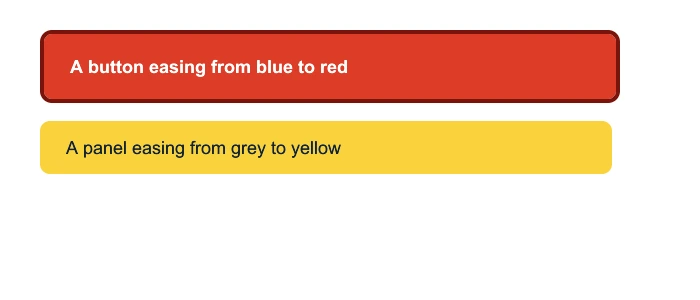

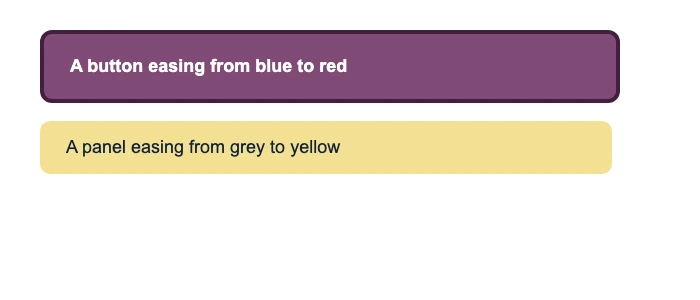
CSS transitions were read and never played: a button that should fade from blue to red over a second just switched. They now run. Background, border, outline and decoration colours ease on the engine, opacity and transform transitions play on the GPU compositor at the display's own rate, and a hover that is reversed half way turns back from the colour on screen. Testing this in the app also turned up a bug that hid animation frames: when a page timer read the layout during the engine's tick, the new frame was taken for an unchanged one and never shown.
One second into a two-second colour transition: Floati without transitions (it jumped to the end), Floati 0.1.397, and the reference browser.
The GPU decides 94% of real pages itself
Floati's GPU drawing is held to one rule: every pixel must be exactly what the software renderer draws. Until now that meant the processor still computed the colour of many pixels and the GPU only blended them: bold and underlined text, background images, box shadows, rounded boxes with mixed corners, and every shrunk photo. Each of these is now drawn by the GPU itself, still pixel for pixel. Shrunk photos needed a trick: averaging pixels is exact in whole numbers, and the one division, which GPUs do not round exactly, is reproduced exactly in whole numbers. Across 24 well-known sites the share of the page whose colours the GPU decides went from 69 to 94 percent, and every page stayed identical to software drawing on Apple Silicon and DirectX 12 alike.
変更点
8 件の変更- レンダリングCSS transitions now run. A hover or a script that changes a transitioned property used to jump straight to the new value; background, border, outline and decoration colours now ease from the colour on screen to the new one (a reversed hover turns back from where it is), and opacity and transform transitions play on the GPU compositor at the display's rate. Text colour and layout properties are next.
- Web API と DOMFIX: animation and transition frames the engine drew were sometimes never shown. When a page timer read layout during the engine's tick, the new frame was taken for an unchanged one, so a colour transition showed only its first and last frames.
- レンダリングGPU: bold, italic and underlined text is drawn by the GPU from the glyph cache, underline gaps around descenders included, where every pixel was computed on the processor first.
- レンダリングGPU: background images at or above their natural size, repeated or not, are drawn by the GPU from the image itself. Pages tiled with a small background went from 0 to 90 percent of their tiles decided on the GPU.
- Web API と DOMGPU: outer box shadows are drawn by the GPU, with the processor computing only the rounded corners and the edge where the shadow meets its box.
- レンダリングGPU: shrunk images (most photos on news sites) are drawn by the GPU and stay pixel-identical: the averaging is exact whole-number arithmetic, and the one division is reproduced exactly in whole numbers, since GPU division is not exact.
- レンダリングGPU: rounded boxes with different corner radii are drawn by the GPU, the processor computing only their corners.
- Web API と DOMGPU: inner box shadows are drawn by the GPU outside their soft edge, and steep diagonal gradients stay on the GPU's run tables.
































