모든 버전 v0.1.37723 10월 2026렌더링, JavaScript와 JIT, 기억과 읽기 피드

릴리스 노트는 영어로 작성되어 있습니다.

About half the memory of the reference browser on everyday sites

A memory release, measured on sites picked at random rather than sites we tuned for. On 33 popular websites, opened in Floati and in the reference browser on the same Mac at the same screen sharpness, Floati used 5,777 MB in total against 10,377 MB: 44 percent less, and less on 28 of the 33. Against 0.1.376 it is a bigger change still: on the 26 sites 0.1.376 handled normally, memory fell from 10,158 MB to 4,658 MB, and six of the sites made 0.1.376 run away to between 2 and 22 GB; all six now settle at a few hundred MB. Getting there meant fixing real bugs those sites showed: a page whose style sheet was left unfinished now looks styled, carousels built on a very common script library show their slides, the most common way of holding floated boxes together works, animated images no longer keep every frame in memory, a video and a page of frames inside frames can no longer eat gigabytes, and a news site whose server sends a less common character in its headers now loads. Measured and tested on a Mac; the Windows build passes the same engine tests.

reference browser 10,377 MB -> Floati 5,777 MB33 random sites, total memory
1 -> all of themSlides the carousel script found
8,151 -> 242 MBVideo page at its peak
주요 내용5

Measured on random sites, against the reference browser

Memory per site after it settles, Floati and the reference browser, same Mac, same screen density

We took 35 sites at random from a public list of the most visited websites: news, shops, a university, a bank, government, software makers, a wiki in Korean, a recipe site in Japanese. Each was opened in Floati and in the reference browser on the same Mac, both drawing at twice the pixel density (a Retina screen), and we counted all the memory each browser used for it once the page had settled, every process of the reference browser included. Two sites could not be compared: a bank whose certificate is not publicly trusted (neither browser opens it) and a financial news site that shows Floati a robot check instead of its page. On the other 33 Floati used 5,777 MB and the reference browser 10,377 MB: 44 percent less. Floati used less on 28 of them, often far less (a portal 95 MB against 696, a learning site 69 against 331). It still uses more on five: a maths software site and a science magazine, where large photos are kept at more pixels than they are drawn at, a government site with a 4K video, a shop and a search page. Those are the next targets.

33 random sites, total memoryreference browser 10,377 MB -> Floati 5,777 MBSites where Floati uses less28 of 3326 of the sites, 0.1.376 -> 0.1.37710,158 -> 4,658 MBSites where 0.1.376 ran away to gigabytes6 -> none

Pages that came out broken now look right
이전이후
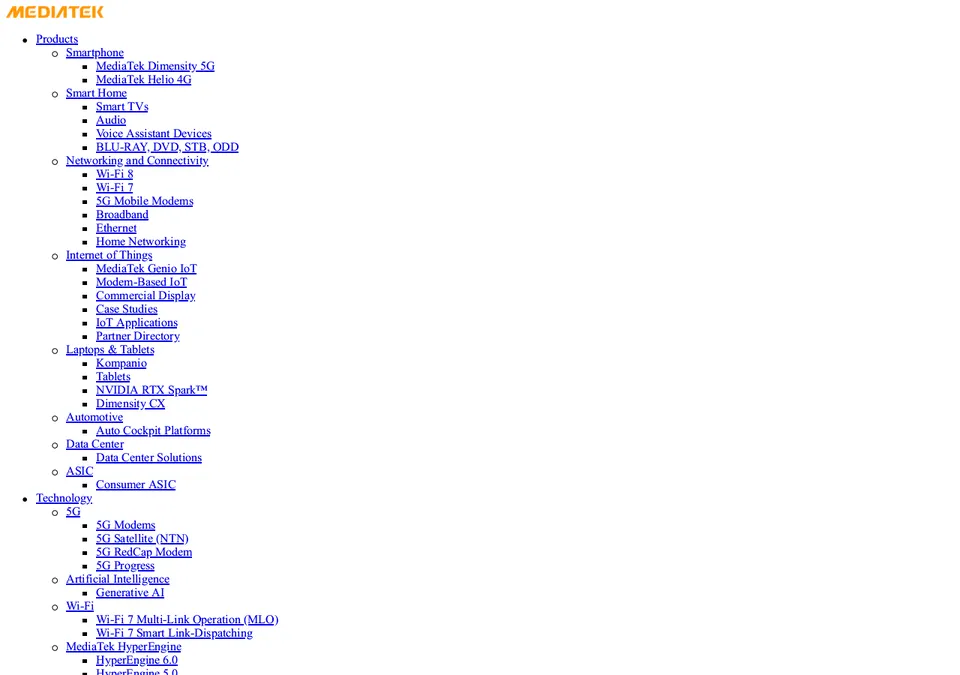
이전: a chipmaker's home page: unstyled before, laid out with its carousel now; the reference browser for comparison (its carousel happens to show another slide)
이전
이후: a chipmaker's home page: unstyled before, laid out with its carousel now; the reference browser for comparison (its carousel happens to show another slide)
이후 · v0.1.377
기준 브라우저에서 본 같은 페이지
기준 브라우저

Testing on random sites found bugs the usual test pages never hit. A chipmaker's home page came out as a bare list of links: one of its inline style sheets ended with two blocks left open and its main sheet with an unfinished comment, so every rule after it was read as part of the broken one. A style sheet left open at its end is now closed there, as the standard says. With that fixed, its carousel showed every slide stacked on top of each other: the carousel script counts with a number that starts as text, and adding one to the text "0" gave "01" instead of 1, so the very common script library it uses only ever found the first slide. Counting now turns the value into a number first, on every tier of the JavaScript engine. Then the slide strip had no height at all: the most common way of making a box hold its floated children (an invisible table-like box after them) was ignored. It works now too. The page now matches the reference browser.

a chipmaker's home page: unstyled before, laid out with its carousel now; the reference browser for comparison (its carousel happens to show another slide)

Slides the carousel script found1 -> all of them

No page can eat gigabytes any more

On six of the random sites 0.1.376 kept growing until it held between 2 and 22 GB: an encyclopedia, a tech review site, a wiki, a statistics office. Their scripts build and drop large amounts of linked data while they run, and that memory was only reclaimed once the script finished. Memory is now reclaimed while a long script runs, and a page that passes a quarter of the computer's memory is stopped with a message saying so, the way a browser ends a tab that runs out of memory. All six now settle at a few hundred MB. Two pages had causes of their own. A government site plays a video that the system decodes for us; every decoded frame of a stretch of video was kept, more than 8 GB. Now at most 96 MB of frames are kept and an idle video lets go of them: 8,151 MB at its peak before, 242 MB now. A phone company's page puts a page inside a frame that loads the same page again, which loaded itself again, and so on: 4,169 MB. A frame can no longer show a document its own parent already shows, and a page loads at most 128 frame documents (the console says why when it stops one): 448 MB now.

Video page at its peak8,151 -> 242 MBPage that framed itself4,169 -> 448 MB

Animated images keep only what changes

An animated picture was kept as every one of its frames, fully decoded: a science magazine's front page held 161 MB of them. Most of a frame is the same as the one before it, so Floati now keeps only what changed from one frame to the next, packed, and rebuilds each frame as it is shown. Frames are also decoded one at a time instead of all at once, and an animation wider than the screen is kept at the screen's width, like a still photo. Every frame still comes back pixel for pixel. Still photos follow the same rule: a picture far wider than the window keeps only the pixels a screen can show.

Animated frames on a magazine front page161 MB decoded -> kept as changesA chipmaker's page with huge photos626 -> 434 MB

A news site loads, and scripts see their images

Servers squeeze their reply headers with a fixed code table. Floati knew only the part of the table for plain letters and digits, so when a financial news site sent a less common character, the whole reply was refused and the page never loaded. The full table is in now, checked against the standard's own example. Its robot-check script then failed on a loop form Floati did not accept (a loop that stores each key into an array slot), which is now supported. Separately, a page's scripts now see the images Floati has already loaded as loaded, at their real size; before, a script asking for an image's size started a second download of it and read nothing until that finished.

Characters a server may send in a headerprintable only -> all of them

바뀐 점

변경 15개
  1. 기억과 읽기33 random popular sites: 5,777 MB in Floati against 10,377 MB in the reference browser, same Mac, same screen density (less on 28).
  2. 렌더링A style sheet left unfinished at its end is closed there, so the rules after it still apply.
  3. 렌더링Counting up or down (x++ and x--) turns text into a number first, so carousels built on a common script library find every slide.
  4. JavaScript와 JITx++ on an array slot whose index itself counts (a[k++]++) counts the index once.
  5. 렌더링The invisible table-like box sites use to hold floated children together now does.
  6. JavaScript와 JITA loop may store each key or item into an array slot or a property (for (a[0] in object)).
  7. 기억과 읽기A video keeps at most 96 MB of decoded frames, and an idle video lets go of them (a government site: 8,151 -> 242 MB at its peak).
  8. 기억과 읽기A frame cannot load a page its parent already shows, and a page loads at most 128 frame documents (a page that framed itself: 4,169 -> 448 MB).
  9. 기억과 읽기A page whose scripts pass a quarter of the computer's memory is stopped, with a message saying why.
  10. 기억과 읽기Animated images keep only what changes between frames and decode one frame at a time.
  11. 기억과 읽기Photos far wider than the screen keep only the pixels a screen can show; layout and scripts still see the real size.
  12. 렌더링Scripts see images Floati has already loaded as loaded, at their size, without downloading them again.
  13. 렌더링Reply headers with any character now load (a financial news site never loaded).
  14. 기억과 읽기Engine memory work since 0.1.376: smaller bytecode, shared style rules, compact ad-block lists, freed memory given back sooner, memory reports split by part of the engine.
  15. 기억과 읽기Known: large photos drawn small and code that never runs still cost more than they should; those are next.

v0.1.377 이후 전부를 한곳에서

버전

v0.1.0 - 0.1.9 · 10 7월 2026418v0.1.427 · 25 11월 2026

11월2026 · 버전 13개

10월2026 · 버전 32개

38530 10월Ahead of the reference runtime on 7 of 8 workloadsv0.1.385 · 기억과 읽기32 38429 10월Safety review, a rare crash fixed, functions compiled soonerv0.1.384 · 기억과 읽기46 38327 10월JavaScript ahead of the reference runtime on six of eight speed testsv0.1.383 · JavaScript와 JIT36 38225 10월Closed tabs give their memory back, and XML pages read as XMLv0.1.382 · 기억과 읽기12 38125 10월Lighter script code, and calls between scripts that run as ordinary callsv0.1.381 · 기억과 읽기15 38025 10월Scrolling boxes scroll, pages look right, and scripts from other sites need permissionv0.1.380 · 렌더링16 37924 10월Pages laid out the way their authors wrote them, and less memory againv0.1.379 · 렌더링22 37823 10월Other sites' data stays private, and less memory againv0.1.378 · 기억과 읽기 37723 10월About half the memory of the reference browser on everyday sitesv0.1.377 · 기억과 읽기15 37622 10월A minimized window stops piling up graphics memoryv0.1.376 · 기억과 읽기 37522 10월Closed pages let go, sites stay apart, and fonts stop costing memoryv0.1.375 · 기억과 읽기9 37421 10월A floating video you can move, that opens without a black flashv0.1.374 · 탭과 인터페이스 37321 10월Every page on our own engine, two pages side by side, videos that keep playing, and your own clockv0.1.373 · 탭과 인터페이스17 37021 10월Open your files, share to your phone, have pages read aloud, install sites as apps, play with a controller, and accented text drawn rightv0.1.370 · 개인정보 보호와 Shields · 확인해 보기11 36920 10월Passkeys with Touch ID and Windows Hello, sites that work offline, notifications you allow, and devices asked for first, all kept on your devicev0.1.369 · 개인정보 보호와 Shields · 확인해 보기9 36519 10월The code-size budget fits your processor, and code that has gone cold makes room for code that is hot nowv0.1.365 · JavaScript와 JIT · 확인해 보기 36419 10월Compiled code that fits the processor's caches: big pages up to 1.8 times faster, and fast compiled code on Windows and Intel machinesv0.1.364 · JavaScript와 JIT · 확인해 보기 36319 10월Thermal runs on one code generator, building strings is up to 8 times faster, and two slow paths that grew with the square of their input are linearv0.1.363 · JavaScript와 JIT · 확인해 보기12 35816 10월Thermal, Floati's own optimizing compiler, is on: hot loops keep their numbers and strings in registersv0.1.358 · JavaScript와 JIT · 확인해 보기 35715 10월Loops that test a number run as machine code, more of your functions compile, and reading page nodes is three times fasterv0.1.357 · JavaScript와 JIT · 확인해 보기14 35614 10월Recursion makes a fraction of the calls, loops keep objects in registers, and element writes stop searchingv0.1.356 · JavaScript와 JIT · 확인해 보기 35514 10월A hot loop changes compiler without stopping, property writes skip the detour, and pure recursion remembers its answersv0.1.355 · JavaScript와 JIT · 확인해 보기 35413 10월Floati compiles JavaScript with its own compiler, Updraft: about a hundred times faster to compile, and compiled code no longer piles upv0.1.354 · JavaScript와 JIT · 확인해 보기 35211 10월Code that loads on demand starts at once, images decode beside their downloads, writes run compiledv0.1.352 · 렌더링 · 확인해 보기10 35010 10월Helpers that compile, strings that stay small, and events that fire fastv0.1.350 · JavaScript와 JIT · 확인해 보기14 3436 10월Sign-ins that stay signed in, a real IndexedDB, and a storage button that shows what sites keepv0.1.343 · 개인정보 보호와 Shields · 확인해 보기25 3385 10월Pages load faster, render truer and gain a dozen modern web features, each one checked against the reference browserv0.1.338 · 웹 API와 DOM · 확인해 보기19 3352 10월A developer-docs site works like the reference browser, and every frame gets its own built-insv0.1.335 · 렌더링12 3342 10월Iframes that cost what a paragraph costs, live selections, and rounder cornersv0.1.334 · 렌더링10 3331 10월Fewer script errors on real sites, and finished pages give all their memory backv0.1.333 · JavaScript와 JIT10 3311 10월A crash on busy news sites fixed, and pages lighter on the processorv0.1.331 · 렌더링 3301 10월JavaScript scores 100, and big pages stop stuttering when they clean upv0.1.330 · JavaScript와 JIT11

9월2026 · 버전 29개

32930 9월The JavaScript engine proves what it can skipv0.1.329 · JavaScript와 JIT9 32830 9월JavaScript runs at the reference browser's speed on 41 of our 42 measured workloadsv0.1.328 · JavaScript와 JIT 32528 9월Deep recursion runs like it does in the reference browserv0.1.325 · JavaScript와 JIT 32327 9월JavaScript measured at 94, JSON three times faster, and a round of fixes found against the reference browserv0.1.323 · JavaScript와 JIT11 32227 9월Closed pages give their memory back whole, and JavaScript measured at 87v0.1.322 · JavaScript와 JIT11 32127 9월Half the memory, and JavaScript measured at 80v0.1.321 · JavaScript와 JIT14 32026 9월Pages no longer freeze while a script waits on the networkv0.1.320 · JavaScript와 JIT 31926 9월A PDF viewer that does what Acrobat Pro charges forv0.1.319 · 탭과 인터페이스16 31025 9월Pages stay alive, repaints never block your scroll, and type matches the reference browser'sv0.1.310 · 렌더링10 30924 9월Pages arrive like they do in the reference browser, in a fraction of the memoryv0.1.309 · 네트워크13 30824 9월Pages drawn by your graphics card, and scrolling that never waitsv0.1.308 · 렌더링 30122 9월Sites can no longer follow you between other sites, and the next page starts soonerv0.1.301 · 개인정보 보호와 Shields 30019 9월Reads the newest web compression, reuses secure connections, and remembers where sites livev0.1.300 · 기억과 읽기 29717 9월Setting up and filling arrays of numbers is now several times faster, and faster than the reference browserv0.1.297 · JavaScript와 JIT 29116 9월A private wayback machine for pages you seal, cited answers that open where you read them, and a privacy report that is ready the instant a page loadsv0.1.291 · 기억과 읽기 29015 9월Floati spots trackers no list has caught, answers your questions from your own reading, and gets even closer to the pixelv0.1.290 · 개인정보 보호와 Shields 28815 9월The pages where you type a password stay out of your memory, and text renders truer to the pagev0.1.288 · 기억과 읽기 28311 9월Messages between windows now prove who sent themv0.1.283 · 렌더링 28111 9월See a site's own rules protect you, and what it was never toldv0.1.281 · 렌더링 27410 9월Fingerprint Shield: see and prove what a page tried to learn about youv0.1.274 · 기억과 읽기 2468 9월Memory: your browser remembers what you read, and can prove itv0.1.246 · 기억과 읽기 2346 9월WebAssembly SIMD lands, completing the WebAssembly platformv0.1.234 · 렌더링 2335 9월Real WebAssembly apps that share memory with the page now workv0.1.233 · 기억과 읽기 2173 9월Your passwords, the Floati wayv0.1.217 · 탭과 인터페이스 2112 9월A correctness fix for today's list-speed improvementv0.1.211 · JavaScript와 JIT 2102 9월The most common way people work with lists of data now runs at full speedv0.1.210 · JavaScript와 JIT 2092 9월Big objects are instant now, instead of getting slower the more you addv0.1.209 · 기억과 읽기 2082 9월Floati's own engine got dramatically faster at the code real pages run every framev0.1.208 · JavaScript와 JIT 2061 9월Explain this page: the browser now understands what a site does, and can prove itv0.1.206 · 개인정보 보호와 Shields

8월2026 · 버전 19개

20328 8월Pages you open with the Floati engine now render on your graphics cardv0.1.203 · 렌더링 19421 8월Faster on pages that change as you use them - plus a tab-hover fixv0.1.194 · 탭과 인터페이스 19321 8월Select text, find on the page, and zoom - plus faster renderingv0.1.193 · 탭과 인터페이스 18619 8월Engine tabs remember where you werev0.1.186 · 탭과 인터페이스 14814 8월WebAssembly numbers stay exact: 64-bit integers cross as BigIntv0.1.148 · JavaScript와 JIT 14714 8월WebAssembly interop rounds out: imported globals and memoryv0.1.147 · 기억과 읽기 13914 8월WebGL can texture from an image or a canvasv0.1.139 · 렌더링 13414 8월WebAssembly now runs real compiled modules, not just toy onesv0.1.134 · 기억과 읽기 13313 8월The engine now runs WebAssemblyv0.1.133 · 기억과 읽기 12813 8월HSTS: sites that demand https are never reached over plaintext, not even oncev0.1.128 · 네트워크 1097 8월Web Audio convolution reverb + stereo sample playbackv0.1.109 · 미디어 785 8월Ask knows when to stop, and forms can edit their fieldsv0.1.78 · 웹 API와 DOM 775 8월Ask joins the dots across sentencesv0.1.77 · JavaScript와 JIT 745 8월Bracket property access gets fast, and Ask follows your timelinev0.1.74 · 렌더링 735 8월Building a list gets fast, and Ask hears whole phrasesv0.1.73 · JavaScript와 JIT 725 8월Method calls get up to speed, and Ask spreads its sourcesv0.1.72 · 기억과 읽기 715 8월Recursion gets its speed back, and Ask reads the roomv0.1.71 · JavaScript와 JIT 704 8월One press, and you are on the new versionv0.1.70 · 탭과 인터페이스 661 8월The worst score on the board turned out to be a cookie bannerv0.1.66 · 렌더링9

7월2026 · 버전 11개