Versions nyinaa v0.1.36820 Oct 2026Krataafa nhyehyɛeɛ, JavaScript ne JIT, Web APIs ne DOM, Kokoam ne Shields, DevTools, Tabs ne interface Feed

Wɔakyerɛw release ho nsɛm no wɔ Borɔfo kasa mu.

A site's own security rules are kept the whole time the page runs, Trusted Types, a map of every unsafe write in DevTools, and animations from script

Sites can tell the browser which code they are willing to run, through a Content-Security-Policy. Floati kept those rules for the scripts a page arrives with; now it keeps them for everything the page does afterwards. Code built from text (eval, new Function, a timer given a string), inline event handlers and scripts that another script injects are refused when the site's rules say so, and the page hears about each refusal as it would in the reference browser. Trusted Types, the strongest of these rules, is new: a site that requires it gets HTML and script sinks that only take checked values. What a site's rules refused is listed in plain words in the Explain panel, and DevTools gains an XSS risk map: every string a page writes into HTML or code, at the line that wrote it, with the ones carrying text from the address bar at the top. Pages can also animate from script now (element.animate and the whole Web Animations API, scroll-driven timelines included), and several long-standing script bugs are fixed. Measured against the reference browser, the Web APIs surface goes from 62.5 to 63.8 percent, and every test site stays free of script errors the reference browser does not also show.

15 of 15Run-time policy checks matching the reference
26 of 26Trusted Types checks matching the reference
30 of 32 (two follow the standard's property order)Web Animations checks matching the reference
Nsɛm titiriw6

The site's own rules, kept the whole time
KaneAkyiri
Kane: a page reporting what its own security policy refused
Kane
Akyiri: a page reporting what its own security policy refused
Akyiri · v0.1.368
Krataafa no ara wɔ browser a wɔde toto ho mu
Browser a wɔde toto ho

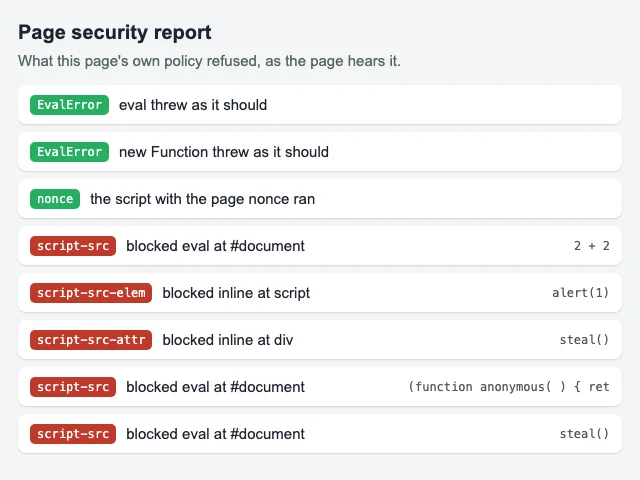
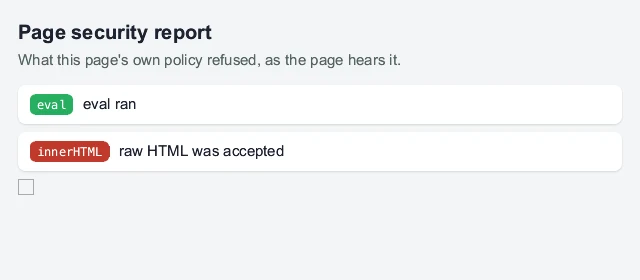
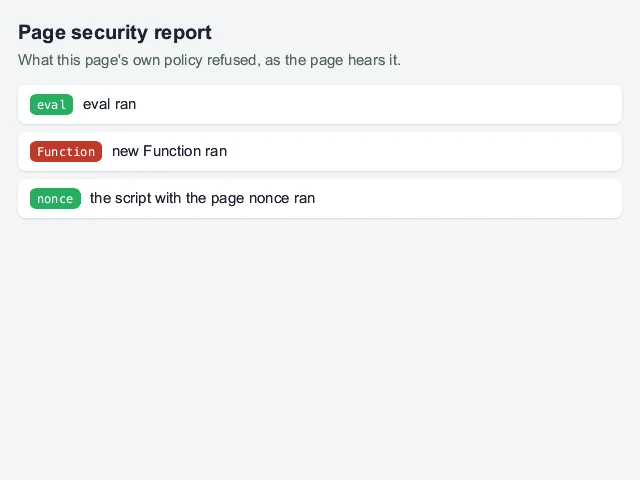
A Content-Security-Policy is a list, written by the site, of the code it is willing to run. It is the main defense against cross-site scripting: when an attacker manages to put script into a page, the site's own policy is what stops it. Floati enforced it for the scripts in the page's HTML; everything the page did later ran unchecked. Now every way of turning text into code answers to the policy: eval and new Function throw the reference browser's EvalError, a timer given a string is refused, an inline handler such as onclick="..." is refused when it would first run, and a script that another script injects is checked against the policy's nonces, hashes, hosts and 'strict-dynamic'. Each refusal reaches the page as a securitypolicyviolation event at the element involved, and as a report to any ReportingObserver, with the same directive, sample and disposition the reference browser gives; a report-only policy reports and refuses nothing. In the picture, the page's own security report: before, the old engine ran the code the site forbade.

a page reporting what its own security policy refused

Run-time policy checks matching the reference15 of 15Scripts inserted by every insertion method14 of 14

Trusted Types

KaneAkyiri
Kane: a page that requires Trusted Types: raw HTML and code from text are refused
Kane
Akyiri: a page that requires Trusted Types: raw HTML and code from text are refused
Akyiri · v0.1.368
Krataafa no ara wɔ browser a wɔde toto ho mu
Browser a wɔde toto ho

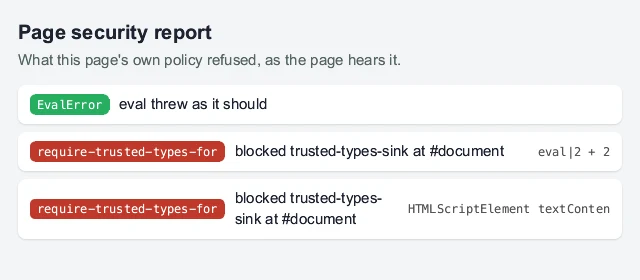
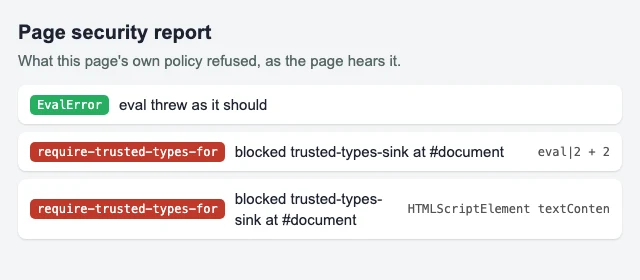
Trusted Types is the policy a site uses to say that no raw string may become HTML or code on its pages: innerHTML, document.write, insertAdjacentHTML, a script's text or source, an iframe's srcdoc, eval and the rest take only values a policy the site wrote has checked. Floati now has the whole of it: trustedTypes and its policies, TrustedHTML, TrustedScript and TrustedScriptURL, the default policy that is asked about every string, the list of policy names a site allows, and every sink, with the reference browser's errors and violation reports. eval given a TrustedScript runs it.

a page that requires Trusted Types: raw HTML and code from text are refused

Trusted Types checks matching the reference26 of 26

See what a site's rules protected you from
KaneAkyiri
Kane: the Explain panel's Page policy enforced card, for the same page
Kane
Akyiri: the Explain panel's Page policy enforced card, for the same page
Akyiri · v0.1.368

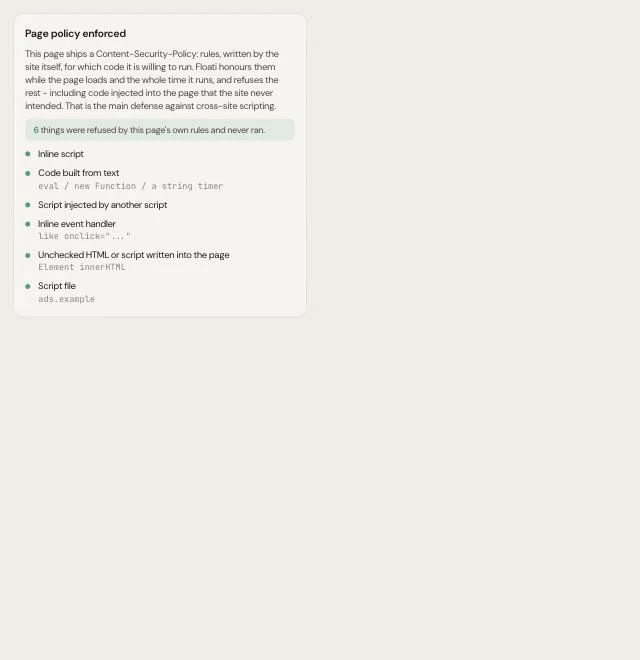
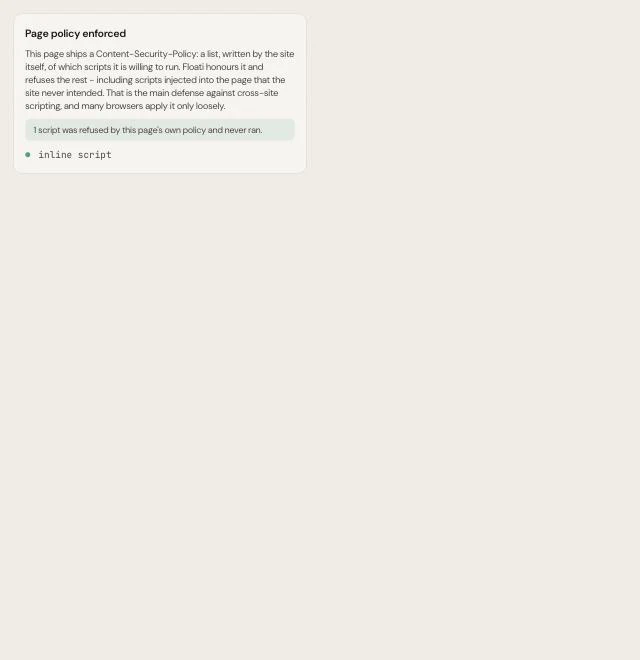
The Explain panel's Page policy enforced card listed only the scripts refused while the page loaded. It now lists everything the site's own rules refused while you used the page, each in plain words: code built from text, an inline event handler, a script injected by another script, unchecked HTML or script written into the page, an unapproved script policy, or a script file and the site it came from. A page that retries the same thing in a loop is one line.

the Explain panel's Page policy enforced card, for the same page

An XSS risk map in DevTools
The XSS risk map recording a shop page reached by a crafted link

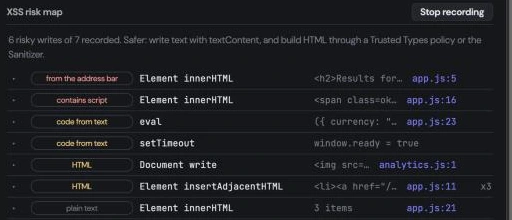
The Privacy panel can now record every string a page writes into something that parses HTML or runs code: innerHTML and outerHTML, insertAdjacentHTML, document.write, DOMParser, a script's text and source, an iframe's srcdoc, a javascript: link, an event handler attribute, eval, new Function and string timers. Each write is shown at the line of the page's own code that made it (one click opens it), merged with others from the same place, and graded: from the address bar (the string carries text from the link's query or fragment, or window.name, into HTML or code: the shape of a DOM XSS, where whoever crafts the link writes into your page), contains script, code from text, HTML, or plain text that textContent would handle safely. Nothing is blocked while it records, and it costs nothing when it is off. No other browser's developer tools show this.

Animations from script
KaneAkyiri
Kane: a toast, a progress bar and a chip animated with element.animate, paused part way
Kane
Akyiri: a toast, a progress bar and a chip animated with element.animate, paused part way
Akyiri · v0.1.368
Krataafa no ara wɔ browser a wɔde toto ho mu
Browser a wɔde toto ho

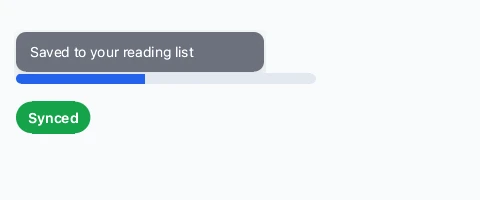
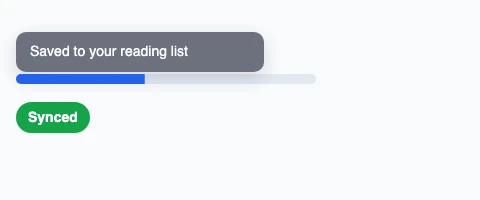
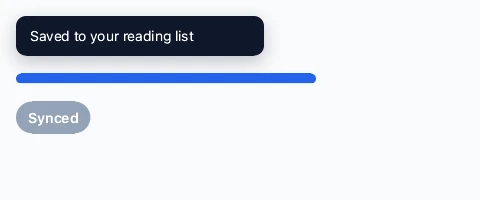
element.animate() and the Web Animations API are real: Animation, KeyframeEffect, both keyframe forms with offsets and easing, timing with delays, iterations, direction and fill, play, pause, finish, cancel, reverse, seeking and playback rate, the ready and finished promises, finish and cancel events, getAnimations, commitStyles, and timelines that follow scrolling (ScrollTimeline, ViewTimeline). An animation is sampled by the renderer on the page's clock, so it plays without any script running per frame, and a scroll-driven one follows the scroll frame by frame. A 2D transform now pivots on its transform-origin (it used the centre).

a toast, a progress bar and a chip animated with element.animate, paused part way

Web Animations checks matching the reference30 of 32 (two follow the standard's property order)

Script fixes found on the way

setTimeout('code') ran nothing (it threw). A script inserted by append, prepend, insertBefore, before, after, replaceChildren, replaceWith or insertAdjacentElement ran late instead of at once, a script given its text after it was inserted never ran, and document.currentScript was empty inside one. A page that wrapped the innerHTML setter and called the original wrote nothing, and a setter wrapped with the original getter was skipped. DOMParser kept its method on each instance. Error stacks stopped at a getter or setter instead of continuing into the code that read or wrote the property, and DOM frames are named by their interface. Every one of these now behaves as the reference browser does.

Stacks through accessors matching the reference6 of 7

Deɛ asesa

nsesaeɛ 8
  1. Kokoam ne ShieldsA site's Content-Security-Policy is kept while the page runs: eval, string timers, inline handlers and injected scripts refused as the site asks; every refusal reported to the page.
  2. Kokoam ne ShieldsTrusted Types: policies, the default policy, and HTML and script sinks that take only checked values when a site requires them.
  3. Kokoam ne ShieldsThe Explain panel lists, in plain words, everything the site's own rules refused while you used the page.
  4. Tabs ne interfaceDevTools: an XSS risk map of every HTML and script sink write, at its line, graded by risk.
  5. JavaScript ne JITWeb Animations: element.animate, the play state machine, promises and events, scroll-driven timelines, played by the renderer.
  6. Krataafa nhyehyɛeɛError stacks continue through getters and setters, as in the reference browser.
  7. Web APIs ne DOMFixed: string timers, scripts inserted by any method run at once, wrapped setters, dynamic import on sites that forbid eval, DOMParser, CryptoKey objects.
  8. Web APIs ne DOMWeb APIs measured against the reference browser: 62.5 -> 63.8 percent of the surface; all 14 test sites free of reference-only script errors.

Sɔ hwɛ wɔ wo browser mu

Nhwehwɛmu biara di dwuma wɔ browser a woreyɛ ho akenkan no mu. Wɔmmfa hwee nkɔ baabiara.

HwɛWo browserFloati
a Trusted Types policy makes TrustedHTMLƐrehwɛAane
a violation event can be built by scriptƐrehwɛAane
ReportingObserver and the CSP report body existƐrehwɛAane
the original innerHTML setter, called by a wrapper, still writesƐrehwɛAane
a script inserted with append runs at onceƐrehwɛAane
a script given its text after insertion runs thenƐrehwɛAane
document.currentScript inside an inserted scriptƐrehwɛAane
a stack taken in a setter names its callerƐrehwɛAane
Trusted Types: script, script URL and the sink mapƐrehwɛAane
DOMParser.parseFromString lives on the prototypeƐrehwɛAane
Atwam 10 / 10
Biribiara fi v0.1.368 wɔ baabi korɔ

Versions

v0.1.0 - 0.1.9 · 10 Jul 2026418v0.1.427 · 25 Nov 2026

October2026 · versions 33

37121 OctDrop files onto pages, dictate without your voice leaving the Mac, and controllers that rumblev0.1.371 · Web APIs ne DOM · sɔ hwɛ 37021 OctOpen your files, share to your phone, have pages read aloud, install sites as apps, play with a controller, and accented text drawn rightv0.1.370 · Kokoam ne Shields · sɔ hwɛ11 36920 OctPasskeys with Touch ID and Windows Hello, sites that work offline, notifications you allow, and devices asked for first, all kept on your devicev0.1.369 · Kokoam ne Shields · sɔ hwɛ9 36820 OctA site's own security rules are kept the whole time the page runs, Trusted Types, a map of every unsafe write in DevTools, and animations from scriptv0.1.368 · Kokoam ne Shields · sɔ hwɛ 36720 OctEvents, form controls, performance timing, URL patterns, live streams and the newest JavaScript: the Web APIs score rises from 59 to 62v0.1.367 · Web APIs ne DOM · sɔ hwɛ10 36619 OctEvents, custom form controls, fonts and navigation work the way the web standards say: the Web APIs score rises from 53 to 59v0.1.366 · Web APIs ne DOM · sɔ hwɛ9 36519 OctThe code-size budget fits your processor, and code that has gone cold makes room for code that is hot nowv0.1.365 · JavaScript ne JIT · sɔ hwɛ 36419 OctCompiled code that fits the processor's caches: big pages up to 1.8 times faster, and fast compiled code on Windows and Intel machinesv0.1.364 · JavaScript ne JIT · sɔ hwɛ 36319 OctThermal runs on one code generator, building strings is up to 8 times faster, and two slow paths that grew with the square of their input are linearv0.1.363 · JavaScript ne JIT · sɔ hwɛ12 36219 OctA page scheduler that stalled now runs, try / finally and spreads compile, and deleting thousands of properties is 180 times fasterv0.1.362 · Krataafa nhyehyɛeɛ · sɔ hwɛ 36118 OctThermal runs on Windows and Intel machines, a register fix for compiled code on Windows, try / catch compiles, and reading a growing string is 200 times fasterv0.1.361 · JavaScript ne JIT · sɔ hwɛ 36018 OctEvery byte of machine code is Floati's own, a news site that showed blank renders, Gust's code is half the size, and closures and ?? compilev0.1.360 · JavaScript ne JIT · sɔ hwɛ9 35916 OctThermal reads object members and folds Math, string building compiles, and methods, Array subclasses and globals behave as the standard saysv0.1.359 · JavaScript ne JIT · sɔ hwɛ 35816 OctThermal, Floati's own optimizing compiler, is on: hot loops keep their numbers and strings in registersv0.1.358 · JavaScript ne JIT · sɔ hwɛ 35715 OctLoops that test a number run as machine code, more of your functions compile, and reading page nodes is three times fasterv0.1.357 · JavaScript ne JIT · sɔ hwɛ14 35614 OctRecursion makes a fraction of the calls, loops keep objects in registers, and element writes stop searchingv0.1.356 · JavaScript ne JIT · sɔ hwɛ 35514 OctA hot loop changes compiler without stopping, property writes skip the detour, and pure recursion remembers its answersv0.1.355 · JavaScript ne JIT · sɔ hwɛ 35413 OctFloati compiles JavaScript with its own compiler, Updraft: about a hundred times faster to compile, and compiled code no longer piles upv0.1.354 · JavaScript ne JIT · sɔ hwɛ 35311 OctStyle matching tries a third of the rules, queries prepare their selector once, sibling walks stay fastv0.1.353 · Krataafa nhyehyɛeɛ · sɔ hwɛ 35211 OctCode that loads on demand starts at once, images decode beside their downloads, writes run compiledv0.1.352 · Krataafa nhyehyɛeɛ · sɔ hwɛ10 35111 OctStyles read once, layouts redone only where they changed, built-ins in compiled loopsv0.1.351 · JavaScript ne JIT · sɔ hwɛ12 35010 OctHelpers that compile, strings that stay small, and events that fire fastv0.1.350 · JavaScript ne JIT · sɔ hwɛ14 34910 OctScripts that grow in step with their work, layouts laid out once, and colours mixed like the referencev0.1.349 · Krataafa nhyehyɛeɛ · sɔ hwɛ13 3489 OctScripts that only compile when it pays, cards that line up, and bold that stays boldv0.1.348 · Krataafa nhyehyɛeɛ · sɔ hwɛ14 3478 OctCards inside links, small print at its real size, and errors you can followv0.1.347 · Krataafa nhyehyɛeɛ · sɔ hwɛ17 3467 OctA real performance timeline, site icons from the engine with a lookalike check, and forms that lay out rightv0.1.346 · Krataafa nhyehyɛeɛ · sɔ hwɛ14 3457 OctReal WebGL, a real 2D canvas, and canvas text that matches the reference browserv0.1.345 · Krataafa nhyehyɛeɛ · sɔ hwɛ10 3436 OctSign-ins that stay signed in, a real IndexedDB, and a storage button that shows what sites keepv0.1.343 · Kokoam ne Shields · sɔ hwɛ25 3425 OctTheme switchers, chart labels sized by CSS, and SVG text you can measurev0.1.342 · Web APIs ne DOM · sɔ hwɛ 3415 OctCanvas text measured and drawn like the reference browser, and SVG shapes you can measurev0.1.341 · Krataafa nhyehyɛeɛ · sɔ hwɛ 3405 OctScripts can read and change SVG the way they do in the reference browser, and a hidden hang is gonev0.1.340 · Krataafa nhyehyɛeɛ · sɔ hwɛ10 3395 OctEvery computed style, real stylesheet objects and full 3D geometry, each checked against the reference browserv0.1.339 · Web APIs ne DOM · sɔ hwɛ12 3385 OctPages load faster, render truer and gain a dozen modern web features, each one checked against the reference browserv0.1.338 · Web APIs ne DOM · sɔ hwɛ19