版本说明以英文撰写。
Smooth turns, the same bytes on every chip, and fields that keep their text
A release about getting things right, not just getting them on the GPU: all 20 animation test pages now run on the compositor, turned boxes have smooth edges at rest and in motion, rotated frames are the same bytes on the processor, Apple Silicon and DirectX 12, form fields keep their text inside them, and a timer set during page load finally waits its full time. 15 changes, each with its own law in the test gate. The GPU row moves 62 to 65 on the measured animation test, now 20 of 20 pages; the overall score holds at 74.
Form fields that keep their text in
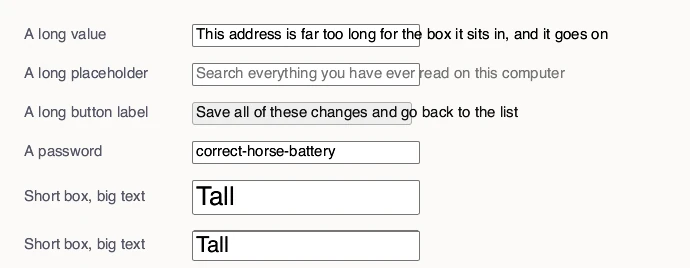

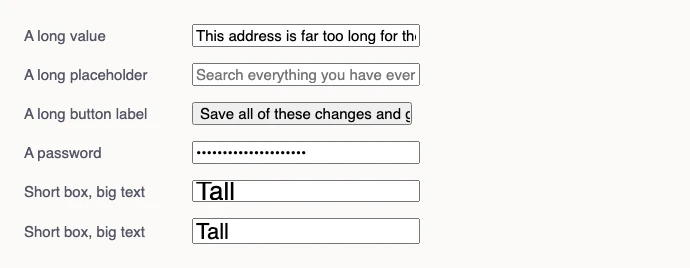
A long address, a long placeholder or a long button label ran straight out of its box and across the page. Worse, a password field drew its letters in plain text. A field's value now stays inside it, a password is dots whatever the page does, and a height the page asks for is the height it gets.
Long values, a password and short boxes with big text: Floati without these fixes, with them, and the reference browser.
Smooth edges, at rest and while turning
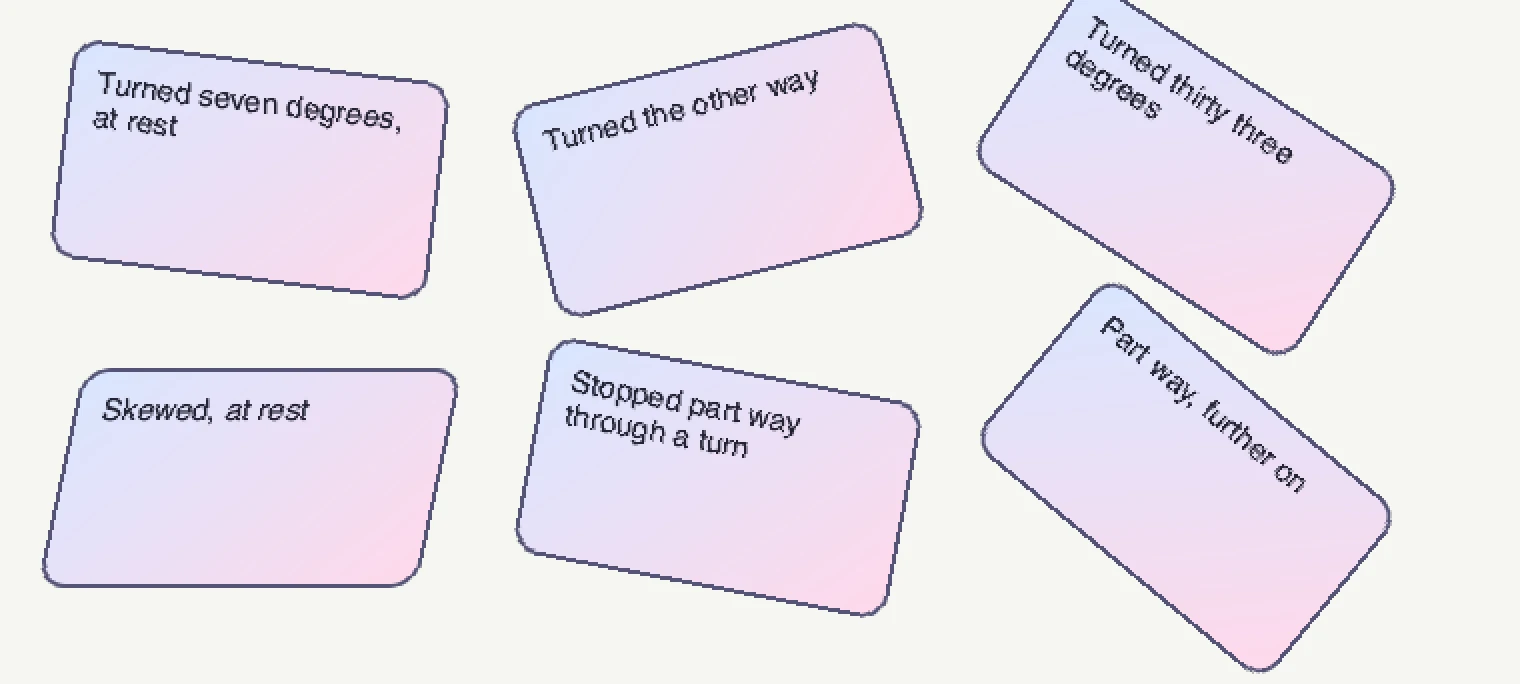
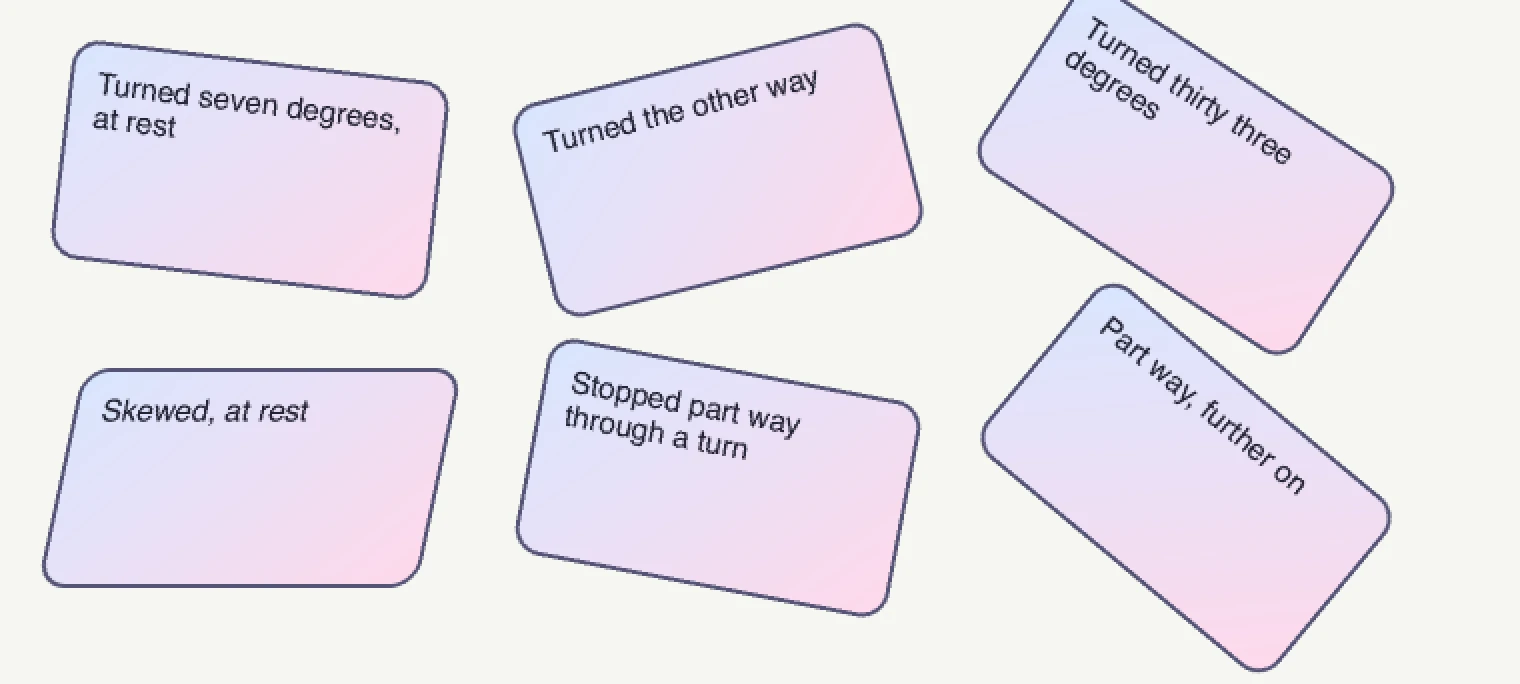
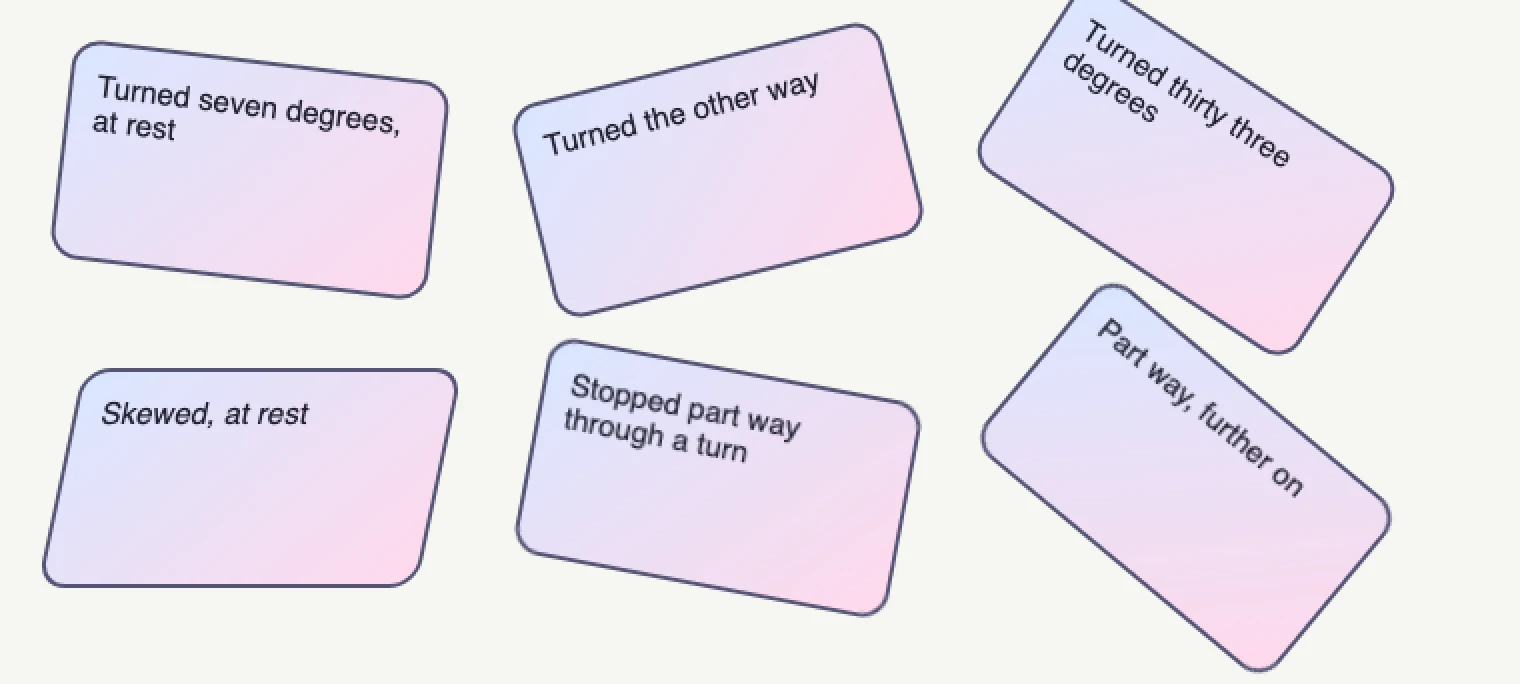
A rotated box was drawn at its own size and turned afterwards, one sample per pixel, so its edges stair-stepped and its text crawled. It is now drawn at twice the size and sampled four times a pixel, and a running rotation uses that same path, so a card looks the same stopped and spinning. It costs less than before, because the compositor does the turning.
Turned, skewed and stopped cards at twice the size: Floati without this fix, with it, and the reference browser.
The same bytes on every chip
Graphics chips round decimal arithmetic differently, so a turned frame could differ a little from one to the next. Our repaired Windows test caught it. Rather than widen the allowed difference, we took decimals out of the sum: turning and skewing need no division, so they can be done in whole numbers, the same steps in software and on the GPU. A rotated frame is now identical byte for byte on the processor, Apple Silicon and DirectX 12. True perspective still needs division, so it keeps its limit: at most 0.1% of pixels, by at most 3 levels.
Every animation page on the compositor
The last of our 20 animation test pages was an animated frosted panel, which needs a picture of the page behind it for every frame. That picture is now one layer, blurred per frame by GPU passes under the panel's rounded shape, so the panel keeps up with the display and the engine sleeps. We also checked it does not leak: five minutes of about 120 real page changes across these pages stayed flat at about 450 MB, GPU memory included.
A timer that waits
While a page loads, its timers ran on a clock that could leap up to 30 seconds ahead, so a page you were looking at saw a 2.5 second delay end almost at once. Splash screens vanished, delayed prompts appeared immediately and timed redirects jumped. A page on screen now keeps real time as it loads.
改动内容
15 项改动- 渲染FIX: text stays inside its form control. A long value, placeholder or button label ran out of the box and across the page.
- 渲染FIX: a password field never paints its value. Its letters were drawn as plain text; they are now dots, whatever the page sets.
- 渲染FIX: a stated input height holds. A big font pushed the box taller than the page asked for.
- 渲染FIX: a box at rest turns smoothly. Rotated and skewed boxes had stair-stepped edges; they are now sampled four times a pixel from a layer at twice the scale, 3D layers included.
- 渲染FIX: a running rotation is drawn exactly as it is at rest, so a spinning card no longer shimmers and its text stays readable. A click lands where the card is drawn, and a fade running with the turn stays on the compositor. A page of eight spinning cards went from 40% to 24% of a core.
- Web API 与 DOMCompositor: animated frosted panels run on the compositor. The page behind is one layer, filtered per frame by GPU passes under the panel's rounded shape, with the panel's own pixels on top. Six panels went from 66% of a core and 22 distinct frames of 60 to 30% and 60 of 60.
- Web API 与 DOMGPU: a frame with no depth is worked out in whole numbers, in the same steps in software and in the shader, so rotated and skewed frames are the same bytes on the processor, Apple Silicon and DirectX 12. Only true perspective still needs division, and it keeps its measured limit.
- 渲染FIX: in that whole-number path, a sample landing exactly on a pixel edge stays on its correct side. Rounding down had shaved a straight edge on a test page; the gate caught it before release.
- 渲染FIX: a timer set during page load waits its full time on a page you are looking at. A load could run the clock up to 30 seconds ahead, so a 2.5 second timer fired after 7 ms, and splash screens, delayed prompts and timed redirects happened at once. It now fires at about 2.44 seconds. Saved-page renders and their fixed clock are unchanged.
- 无障碍FIX: a password field is in the accessibility tree as a text box, with its value masked. A plain field was missing, so a screen reader could not find it, and a field given an explicit role could expose its value.
- 渲染Security: a frosted panel's size is measured before anything is allocated, and one past the budget stays on the normal path.
- 渲染Performance: a frosted panel costs what the page does, and the layer behind it is drawn again only when it changed.
- Web API 与 DOMPerformance: finding which layers to lift is linear in the number of animated boxes, so a page cannot slow it down by adding more, and transitions no longer copy their settings every frame.
- 渲染Testing: the gate goes red when a test does not compile. A compile error used to read as 0 failed.
- Web API 与 DOMTesting: Windows now runs the whole GPU test suite. That stage had never run it, and it is what caught rotated frames differing between graphics chips.





